🏛️ Sugarcane Research Institute, Yunnan Academy of Agricultural Sciences 🔬 National Sugarcane Industry Technology System 📜 Plant Variety Rights CNA20130618.5🌐 US Registration Reg. no. CV-187 ✅ Validated Across 14 National Ecological Trial Sites
🏆 Ultra-High-Sucrose Sugarcane Cultivar with Proven Performance

Yunzhe08-1609

Early-Maturing · High-Yield · Ultra-High-Sucrose · Inversion-Resistant · Strong Stress Tolerance

Ultra-High-Sucrose Sugarcane Cultivar · Max Sucrose 20.3% · Proven Field Performance Across Multiple Growing Regions

7.45
t/mu Cane Yield
15.92%
Avg. Sucrose Content
+21.14%
Yield Increase vs. ROC22
2017
PVP Rights Granted
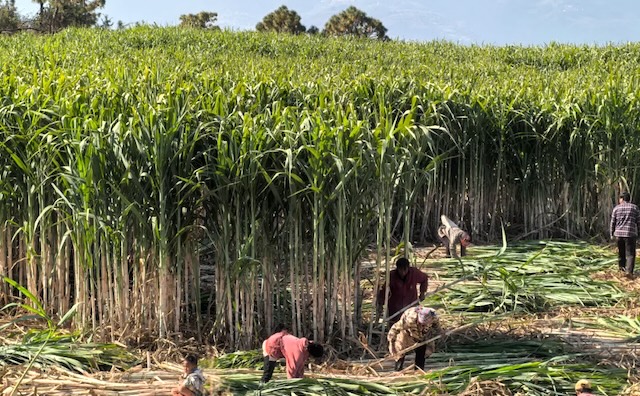
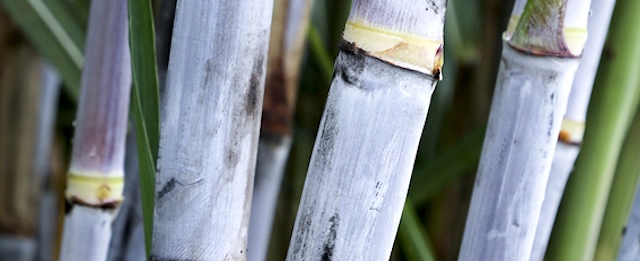
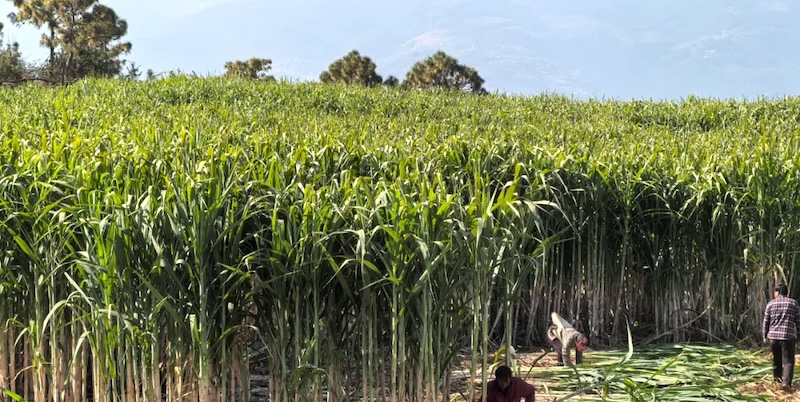
Aerial view of Yunzhe 08-1609 sugarcane plantation Yunzhe 08-1609 sugarcane stalk close-up

Variety Overview

Based on official variety data from the Sugarcane Research Institute, YAAS · Data source: 2015–2016 multi-site regional trials · Supplemented by 2023 Gengma County field verification and grower interviews

🌾

Developed By

Sugarcane Research Institute, Yunnan Academy of Agricultural Sciences
Yunnan Yunzhe Technology Development Co., Ltd.

🧬

Parentage

Female parent: Yunzhe 99-343
Male parent: Yuetang 00-236

📅

Breeding Duration

2007–2017, a 10-year program
Selected from 72,113 seedlings

📜

PVP Certificate No.

CNA20130618.5
Granted: March 1, 2017

🌍

Trial Coverage

14 national ecological trial sites
5 major sugarcane-producing prefectures in Yunnan

🏷️

Suitable Field Types

Dryland slopes, terraced fields
and irrigated paddies

📋

National Registration No.

GPD Sugarcane (2018) 530001
Officially registered in China, 2018

🇺🇸

US Registration

Reg.no. CV-187
PI 689800

🔍 Morphological Characteristics

Plant PartDescription
Stalk TypeMedium-to-large, solid, easy leaf-shedding, compact and upright plant habit
InternodeConical shape, yellow-green stalk color
BudPentagonal; bud tip reaches the growth band; bud wings arc-shaped; bud base flush with leaf scar
Leaf PostureArched, medium leaf width, bright green color
Hair GroupHair group #57 sparse
Leaf Sheath AuricleInner auricle lanceolate; outer auricle triangular

🏅 Awards & Global Standing

20.3%
Max Sucrose Content
Ultra-high-sucrose cultivar with proven field performance
15.28 t/mu
Record Cane Yield
Field-verified in Gengma, Yunnan
1.83M mu
2024 Planted Area in Yunnan
54.3% of provincial total
13.15%
Yunnan Sugar Recovery Rate 2023/24
Among the highest globally

Expanded to Guangxi, Guangdong, and Southeast Asian countries including Myanmar and Laos. Dual registration in China and the US. Variety rights legally protected.

⚠️ Data Note: All yield and sucrose data on this page are derived from the 2015–2016 official provincial regional trials, conducted with a triple-replicate randomized block design including two plant-cane and one ratoon crop cycles. Results are statistically validated. Actual performance may vary by local growing conditions.

Breeding History

From 238 cross combinations, through a 10-year five-nursery breeding program, to Plant Variety Protection rights

🌿 Yunzhe 08-1609

Optimally combines superior agronomic traits from both parents · Carries brown rust resistance gene Bru1

↑ Cross Breeding ↑

Female Parent (♀)

Yunzhe 99-343

✅ Vigorous growth
✅ Large stalk
✅ Strong disease resistance
✅ Carries Bru1 brown rust resistance gene

Parentage: ROC10 × Yacheng 82-96

Male Parent (♂)

Yuetang 00-236

✅ High-sucrose trait
✅ Strong ratoon ability
✅ CP-type high-sucrose genetics
✅ Large stalk from Yuenong 73-204

Parentage: Yuenong 73-204 × CP72-1210

📅 Ten-Year Breeding Timeline

2007
Cross Combinations Design
238 cross combinations · Trial site: Kaiyuan
2008
Hybrid Nursery Trial
72,113 seedlings · Kaiyuan
2009
Selection Nursery
Narrowed to 2,137 elite lines
2010
Evaluation Nursery
375 lines entered in-depth evaluation
2011
Preliminary Variety Comparison
85 lines compared · Kaiyuan
2012–2013
Provincial Ecological Adaptability Trials
45 lines · 6 ecological sites in Yunnan
2012–2014
Variety Comparison Trials
14 lines · Kaiyuan & Mile
2015–2016
Provincial Regional Trials
13 lines/varieties · 6 ecological sites in Yunnan
2016–2017
National Integrated Demonstration
5 lines/varieties · 14 national ecological sites
2017 🎉
Plant Variety Protection Rights Granted
PVP No.: CNA20130618.5 · Granted: March 1, 2017
2018 🇨🇳
National Variety Registration
Reg. No.: GPD Sugarcane (2018) 530001 · Officially listed in the national variety promotion catalog
International 🇺🇸
US Variety Registration
Reg. no. CV-187 / PI 689800 · Recognized in the international variety registration system

Yield Performance

2015–2016 average results from five Yunnan ecological sites (Honghe, Lincang, Dehong, Baoshan, Xishuangbanna) — two plant-cane + one ratoon cycle

Cane Yield by Site (t/mu)

HongheYunzhe 08-1609 vs. ROC22
9.73
8.97
Lincang
8.33
6.22
Dehong
7.61
6.13
Baoshan
7.11
6.55
Xishuangbanna
4.96
4.28
Yunzhe 08-1609 ROC22 (New Taitang No.22)

Sugar Yield by Site (t/mu)

Honghe
1.52
1.24
Dehong
1.23
0.91
Lincang
1.21
0.87
Baoshan
1.12
0.96
Xishuangbanna
0.70
0.65
Yunzhe 08-1609 ROC22 (New Taitang No.22)

📊 Overall Yield & Sucrose Comparison

IndicatorYunzhe 08-1609ROC22 (New Taitang No.22)Improvement
Cane Yield (t/mu)7.456.15▲ +21.14%
Avg. Sucrose Content (Nov–Mar)15.92%14.87%▲ +1.05 percentage points
Sugar Yield per mu (t/mu)1.110.88▲ +26.14%
Sucrose Loss After 6-Day Storage-0.21%-0.63%Significantly better inversion resistance
Purity Loss After 6-Day Storage-4.12%-6.31%Only −0.12% in first 4 days

📍 Gengma Sugarcane Zone — Field Demonstration Data (2023)

15.28 t/mu
Record Cane Yield
2023 Science & Technology Mission field verification
9.1 t/mu
Average Trial Site Yield
Average across Gengma demonstration plots
+1.92 t/mu
Yield Increase per mu
vs. ROC25 and Yuetang 93-159
+1.08%
Sucrose Improvement
vs. legacy variety average in Gengma zone
IndicatorDataShare / Notes
Total Yunzhe 08-1609 area in Gengma (2025/26 season)261,900 mu63.78% of total county cane area (410,600 mu)
Yunzhe 08-1609 new plant area97,800 mu77.01% of total new planting (127,000 mu)
Total Yunnan planted area (2024)1,829,700 mu54.3% of Yunnan's total sugarcane area
Expansion RegionsGuangxi, Guangdong + Southeast AsiaExtended to Myanmar, Laos and other SE Asian countries

Monthly Sucrose Profile

Monthly average sucrose across five ecological sites (two plant-cane + one ratoon) vs. ROC22 — validating early-maturity and high-sucrose traits

November
Yunzhe 08-1609
13.73%
ROC22
12.59%
December
Yunzhe 08-1609
14.87%
ROC22
13.88%
January
Yunzhe 08-1609
15.76%
ROC22
14.86%
February
Yunzhe 08-1609
16.81%
ROC22
16.10%
March
Yunzhe 08-1609
17.16%
ROC22
16.53%

📌 Key Finding: Yunzhe 08-1609 exceeds ROC22 by more than 1 percentage point in every month of the crushing season (November through March). Peak sucrose reaches 20.98% in February and 21.01% in March. Long-term monitoring at Kaiyuan (2012–2017) confirms consistently stable high-sucrose performance.

Six Breakthrough Traits

Core differentiating advantages validated through multi-year, multi-site scientific trials

📈

High & Stable Yield

Yield at all five ecological sites exceeded ROC22. Average yield 7.45 t/mu, a 21.14% increase. Peak yield at Honghe reached 9.73 t/mu — outstanding in both productivity and consistency.

🍬

Early-Maturing & High-Sucrose

Sucrose reaches 13.73% as early as November, rising to 17.16% by March. Peak readings at Kaiyuan: 19.12% in February and 18.88% in March — confirmed across multiple national trial sites.

Inversion Resistance

After 6 days of post-harvest storage, sucrose loss is only 0.21 percentage points (vs. 0.63% for ROC22). Purity drops just 0.12% in the first 4 days — significantly reducing mill processing losses.

🛡️

Strong Disease Resistance

Inherits the Bru1 brown rust resistance gene from its female parent. Clean foliage across environments. Resistant to mosaic disease and brown rust; moderately resistant to smut. Relatively susceptible to top rot in exceptional years — requires monitoring.

☀️

Drought Tolerance & Strong Ratoon Ability

Uniform germination, high maturity rate, good drought tolerance, strong ratoon performance, and lodging resistance. Grows well on dryland slopes in adequate-rainfall areas — wide adaptability.

🌿

Herbicide Tolerance

Shows strong tolerance to the broad-spectrum herbicide foramsulfuron. In side-by-side trials, sensitive varieties showed yellowing and growth arrest while Yunzhe 08-1609 grew unaffected — reducing weed management costs.

🌾

Field Observation — Gengma County, Lincang (2023)

"During the 2023 field verification in Gengma, stalks of Yunzhe 08-1609 were observed reaching heights of over 3 meters with notably uniform stand establishment — even on sloped dryland plots where older varieties had previously underperformed. The leaf canopy remained clean and free of disease lesions throughout the growing season, and the ease of natural leaf-shedding was clearly visible at harvest, significantly reducing manual stripping labor compared to ROC22 and ROC25."

— Field observation recorded during the 2023 Science & Technology Mission yield verification, Gengma County Sugarcane Technology Extension, Lincang City

📸 Field Demonstration Gallery

Aerial view of sugarcane plantation
🛰️ Aerial View of Sugarcane Plantation
Yunzhe 08-1609 stalk internode close-up
🔍 Stalk Internode Close-up · Conical · Yellow-Green
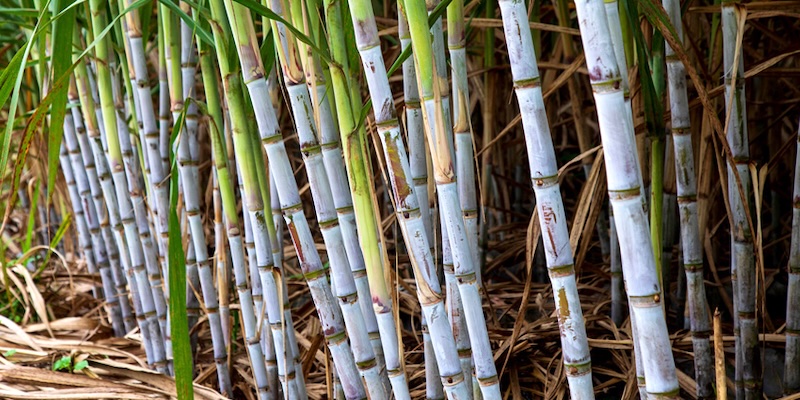
Freshly harvested sugarcane stalks
🌾 Harvest-Ready Stalks · Medium-Large · Solid Core

Cultivation Guidelines

Standardized planting and management recommendations based on the variety's agronomic characteristics

1

Planting Density

For irrigated paddies or well-watered fields, plant 4,000 double-bud setts per mu to ensure adequate stand establishment for high yield.

2

Dryland Slope Planting

In areas with adequate rainfall, dryland slope planting is feasible, leveraging the variety's strong drought tolerance to expand growing areas.

3

Plastic Film Mulching

Apply full plastic film mulching at planting to retain soil moisture and warmth, suppress weeds, and improve germination rate and early growth.

4

Ratoon Crop Management

Use the low-cutting stubble technique for ratoon management to protect buds, improve ratoon emergence, and maximize the variety's strong ratoon trait.

🌏 Recommended Growing Regions

RegionTrial PerformanceRating
Honghe Prefecture9.73 t/mu — highest among all sites; sugar yield 1.52 t/mu⭐⭐⭐⭐⭐
Lincang City8.33 t/mu; peak monthly sucrose 19.34% (March)⭐⭐⭐⭐⭐
Dehong Prefecture7.61 t/mu; sugar yield 1.23 t/mu⭐⭐⭐⭐⭐
Baoshan City7.11 t/mu; November sucrose 14.19% — exceptional early maturity⭐⭐⭐⭐
Xishuangbanna4.96 t/mu; sugar yield 0.70 t/mu⭐⭐⭐
Menglian (Pu'er)February sucrose 17.92% — ~4 pp above ROC22⭐⭐⭐⭐

Certifications & Research Team

Official intellectual property registrations and core scientific development team authorized by agricultural authorities

🔬 Jointly Developed by 16 Leading Plant Breeders

范源洪赵培方 刘家勇吴才文 赵俊赵丽萍 覃伟昝逢刚 朱建荣陈学宽 李复琴姚丽 赵兰珍侯晓周 郭家文李旭辉

📜 Plant Variety Protection Certificate
Variety Name: Yunzhe 08-1609 | Genus: Saccharum
Rights Holder: Sugarcane Research Institute, YAAS & Yunnan Yunzhe Technology Development Co., Ltd.
PVP No.: CNA20130618.5
Application Date: July 5, 2013 | Granted: March 1, 2017

🏛️ Supporting Institutions

🏫

Sugarcane Research Institute, YAAS

Core breeding institution; national-level professional sugarcane research body

🏢

National Sugarcane Industry Technology System

Overseen by the Ministry of Agriculture and Rural Affairs; responsible for national integrated sugarcane technology demonstration

🧪

Yunnan Key Laboratory of Sugarcane Genetic Improvement

Provincial key laboratory providing molecular breeding and genetic improvement support

🌾

Yunnan Sugarcane Industry Technology System

Coordinates variety promotion and industry technical services across Yunnan Province

📊 How Yunzhe Varieties Transformed Yunnan's Sugarcane Industry

With the large-scale adoption of high-yield, high-sucrose Yunzhe varieties (led by Yunzhe 08-1609), Yunnan's sugarcane industry has achieved a historic transformation at the provincial level:

Indicator2016 (Pre-Adoption)2023 (Post-Adoption)Improvement
Cane Yield per mu4.1 t/mu4.8 t/mu▲ +17.1%
Cane Sucrose Content13.5%15.1%▲ +1.6 percentage points
Mill Sugar Recovery RateBelow 12%Above 13%▲ Broke the 13% threshold
Avg. Recovery Rate 2023/24 Season13.15%🌏 Globally competitive recovery rate

🏆 Leading National Ranking for 10 Consecutive Years: Yunnan Province has ranked first in China for both sugarcane sucrose content and mill recovery rate for 10 consecutive years. The province accounts for over 20% of China's total sugar output — a critical pillar of national food security — involving 8 major sugar-producing prefectures and more than 6 million cane farmers.

References & Data Sources

  • Official Variety Profile, Sugarcane Research Institute, Yunnan Academy of Agricultural Sciences (2017)
  • Yunzhe 08-1609 Breeding Record (2007–2017)
  • 2015–2016 Yunnan Five-Site Regional Trial Report
  • 2016–2017 National 14-Site Integrated Demonstration Data
  • Plant Variety Protection Certificate (CNA20130618.5, granted March 1, 2017)
  • National Variety Registration: GPD Sugarcane (2018) 530001
  • US Variety Registration: Reg. no. CV-187 / PI 689800
  • 2023 Gengma County Sugarcane Industry Science & Technology Mission Field Yield Verification Report
  • National Sugarcane Sugar Industry Information Center — 2024 Yunnan Planted Area Monitoring Statistics
  • Kaiyuan Experiment Station — Continuous Sucrose Monitoring Data (2012–2017)

Frequently Asked Questions

Compiled from real grower inquiries — covering variety traits, cultivation techniques, and economic benefits

How much does Yunzhe 08-1609 outyield ROC22 (New Taitang No. 22)?
Based on 2015–2016 official regional trial data across five Yunnan sites (Honghe, Lincang, Dehong, Baoshan, Xishuangbanna), Yunzhe 08-1609 averaged 7.45 t/mu cane yield — a 21.14% increase over ROC22 (6.15 t/mu). Sugar yield per mu reached 1.11 t, up 26.14% from ROC22's 0.88 t. The Honghe site performed best at 9.73 t/mu, producing nearly 0.8 t more sugar per mu.
What regions and field types are suitable for Yunzhe 08-1609?
The variety is well-suited to irrigated paddies, terraced fields, and dryland slopes with good fertility. It has performed well across Yunnan in Honghe, Lincang, Dehong, Baoshan, Xishuangbanna, and Menglian. The national integrated demonstration covered 14 ecological sites nationwide, confirming broad adaptability. Its good drought tolerance also makes it viable on dryland slopes in adequate-rainfall areas.
What is "inversion resistance" and why does it matter for sugar mills?
"Inversion resistance" refers to the ability of harvested cane to retain its sucrose content during post-harvest storage without rapid breakdown. After 6 days of storage, Yunzhe 08-1609 loses only 0.21 percentage points of sucrose (vs. 0.63% for ROC22), and purity drops just 0.12% in the first 4 days (vs. 0.74% for ROC22). For sugar mills, this means a longer raw material intake window and lower processing losses — directly improving sugar recovery rates and profitability.
How strong is Yunzhe 08-1609's ratoon performance? How many ratoon cycles are typical?
The variety has strong ratoon ability, demonstrated in formal "two plant-cane + one ratoon" trials with consistently high ratoon yield and sucrose. The low-cutting stubble technique is recommended to protect bud eyes and improve ratoon emergence. In practice, 2–3 ratoon cycles are typically sustainable depending on local soil conditions and management quality.
What diseases is Yunzhe 08-1609 resistant to? Are there any weaknesses?
Yunzhe 08-1609 is resistant to mosaic disease and brown rust (carrying the Bru1 resistance gene from its female parent) and moderately resistant to smut. Foliage remains clean across diverse environments. Its relative weakness is susceptibility to top rot — infected plants may appear in some areas during unusually hot and humid years. Growers should ensure good field ventilation and monitor closely, applying timely treatment when necessary.
What is the optimal harvest window for Yunzhe 08-1609?
As an early-maturing variety, sucrose already reaches 13.73% in November — enabling mills to open earlier than with late-maturing varieties and easing raw material shortfalls at the start of the crushing season. Peak sucrose occurs in February and March (up to 20.98% and 21.01% respectively). Harvest is viable from November through March, but prioritizing early-season harvest (November–December) is recommended to fully capitalize on the early-maturity advantage.
How can I obtain Yunzhe 08-1609 planting material? Is it protected by intellectual property rights?
Yunzhe 08-1609 is comprehensively protected under dual domestic and international registration:

🇨🇳 Plant Variety Protection Rights (CNA20130618.5): Granted March 1, 2017, protected under China's Regulation on Plant New Variety Protection;
🇨🇳 National Variety Registration (GPD Sugarcane (2018) 530001): Officially listed in China's national variety promotion catalog in 2018;
🇺🇸 US Variety Registration (Reg. no. CV-187 / PI 689800): Recognized within the international variety registration system.

Rights are held by the Sugarcane Research Institute, YAAS, and Yunnan Yunzhe Technology Development Co., Ltd. Commercial propagation, sale, or production use requires written authorization from the rights holders.
How does Yunzhe 08-1609 compare economically to other high-yield varieties?
Compared to ROC22, Yunzhe 08-1609 produces 1.12 t more cane and 0.23 t more sugar per mu. At a mill purchase price of RMB 3,000/t, this translates to roughly RMB 690 additional income per mu. The early-maturity trait also allows mills to start crushing sooner and extend the season, delivering significant overall economic gains. Herbicide tolerance further reduces weed management costs.