On a volcanic island in the Indian Ocean, a 300-year-old industry is finding new life through modernization—and a trade deal with China.
At 7 a.m., the ocean breeze hasn’t yet chased away the last shadows of night, but the sugarcane fields of central Mauritius are already awake. Standing on a ridge overlooking the Flacq plains, you can see the cane stretching toward the horizon in undulating waves of green. The air carries a faint sweetness—the scent of cane juice slowly warming under the tropical sun.
Mark Twain once wrote that “Mauritius was made first, and then heaven; and heaven was copied after Mauritius.” But long before tourists discovered its beaches, this volcanic island built its identity on something else entirely: sugar.
A Crop That Shaped a Nation
Jean-Pierre, a third-generation cane farmer, drives his machete into the soft earth and wipes the sweat from his brow. “What you’re looking at,” he says, gesturing across nearly 50 acres of family land, “is the most Mauritian landscape there is.”
He’s not exaggerating. At its peak, sugarcane covered 90 percent of Mauritius’s arable land. The industry once generated a third of the country’s GDP and more than 90 percent of its export revenue. Today, those numbers have shrunk considerably—sugar now contributes just 2 to 3 percent of GDP directly—but the crop remains woven into the island’s economic and cultural fabric.
The conditions here are nearly perfect for sugarcane. Temperatures hover between 73 and 79°F year-round. Annual rainfall ranges from 60 to 160 inches. And the volcanic soil is rich in minerals. “It’s as if nature designed this island specifically for growing cane,” says Dookuree, CEO of the Mauritius Sugar Syndicate.
Currently, sugarcane occupies between 170,000 and 190,000 acres—more than half the country’s farmland. In a typical year, mills crush 3.5 to 4 million tons of cane to produce 250,000 to 300,000 tons of sugar. The industry still supports 5 to 9 percent of the national workforce, directly or indirectly. And when you factor in transportation, port services, energy production, and export logistics, the economic footprint grows significantly larger.
At the Port Louis docks, bags stamped “Made in Mauritius” are loaded into containers bound for more than 50 countries. Over 80 percent of the island’s raw, refined, and specialty sugars are exported, primarily to the European Union and the United Kingdom.
From Field to Factory: A Modern Transformation
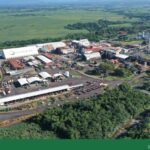
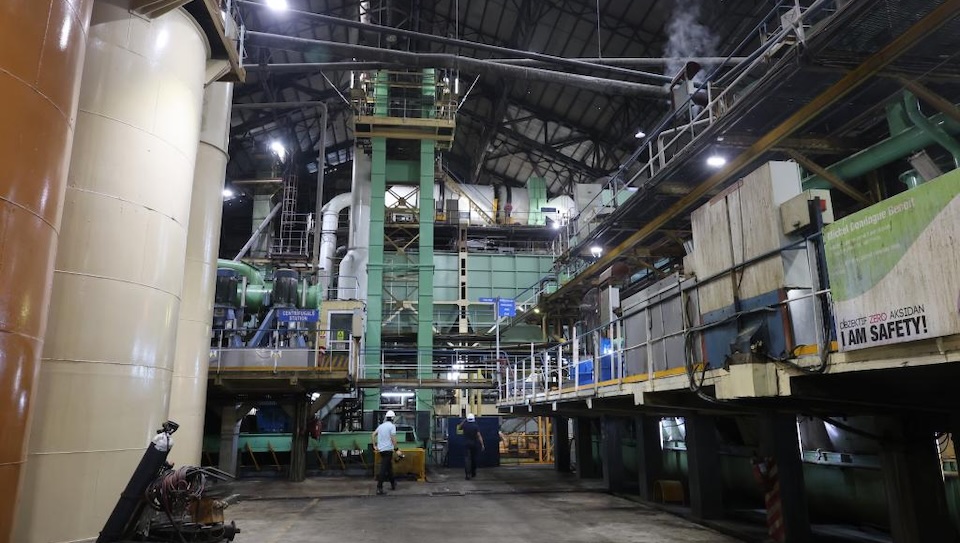
The sugar mill in eastern Flacq is a study in controlled chaos. Trucks laden with freshly cut cane rumble through the gates. Inside, the air is thick with heat and the hum of machinery. Conveyor belts whir. Rollers crush the stalks. Amber-colored juice flows through steel pipes, catching the light before disappearing into evaporators.
Workers move with practiced efficiency, checking gauges and adjusting valves. Here, centuries of agricultural tradition have been compressed into an industrial process that runs around the clock during harvest season.
“We’re down to just four large mills now,” says Ramsamy, a technical supervisor. “But they’re far more efficient than the dozen or so small operations we used to have.”
That consolidation is part of a broader government strategy. Through initiatives like the Sugar Industry Efficiency Act and the Agricultural Modernization Strategy, Mauritius has pursued a three-pronged approach to keeping its sugar sector competitive.
First, the country has invested heavily in modern crushing and refining equipment to boost yields. Second, it has pivoted toward specialty products: low-glycemic sugars, organic varieties, and unrefined cane sugars that retain natural molasses and antioxidants. Third, it has extended the value chain by turning byproducts into revenue streams. Bagasse, the fibrous residue left after crushing, now fuels power plants that generate 15 to 18 percent of the nation’s electricity. Distilleries produce ethanol and rum.
“A single stalk of cane gets used almost completely now,” Ramsamy says, pointing toward the mill’s cogeneration facility. “Nothing goes to waste.”
The specialty sugar segment has become particularly important. Products like Demerara, golden cane sugar, and muscovado offer distinctive caramel notes, natural crystal textures, and rich flavors that command premium prices in baking and beverage applications worldwide.
“We can’t compete on volume,” Dookuree acknowledges. “Our land is limited, labor costs are high, and young people aren’t exactly lining up to work in the fields. So we compete on quality and distinctiveness. Most of what we produce now is specialty sugar—and in that category, we’re genuinely world-class.”
New Markets, New Momentum
The challenges facing Mauritian sugar are real. The European Union, long the industry’s most reliable customer, has scaled back preferential quotas as its own beet sugar production has expanded. Global sugar prices remain volatile. The traditional export model is under pressure.
But a trade agreement with China has opened an unexpected door.
The China-Mauritius Free Trade Agreement, which took effect on January 1, 2021, was the first such pact between China and any African nation. For a small island economy heavily dependent on trade, it represented a significant opportunity.
The agreement covers goods, services, investment, and economic cooperation. Crucially, it includes a dedicated tariff quota arrangement for Mauritian sugar. Starting with 15,000 tons in 2021, the quota increases by 5,000 tons annually until it reaches 50,000 tons in 2028. Within that quota, tariffs drop from 50 percent to just 15 percent.
“This arrangement is hugely significant for our sugar exports,” Dookuree says. Before the agreement, Mauritius had been shipping sugar to China since 2010, but volumes had plateaued between 700 and 1,100 tons annually. Now, roughly one-fifth of the country’s sugar exports benefit from guaranteed market access.
At a processing facility, workers package specialty sugars destined for Chinese buyers. They say the orders have restored confidence in the industry. Representatives from the Mauritius Chamber of Commerce note that Chinese importers have shown particular interest in high-quality specialty products, which has not only increased export volumes but also improved profit margins. At the 2023 China International Food and Catering Expo in Changsha, Mauritian specialty sugars had their own dedicated booth.
“We’re moving in the right direction,” Dookuree says. “The Chinese market has made a tremendous contribution, and we expect to benefit from it for years to come.”
The Taste of Resilience
As evening approaches, the setting sun paints the cane fields gold. The salty ocean breeze rustles through the stalks, producing a sound like whispered conversation.
Sugar is no longer the economic pillar it once was in Mauritius. Tourism and financial services now play larger roles. But cane remains deeply rooted in the island’s identity—a thread connecting land and labor, policy and commerce, tradition and transformation.
Jean-Pierre stands at the edge of his field, surveying cane that will soon be ready for harvest. “Sugar,” he says quietly, “is like life itself. You have to take your time to appreciate the sweetness.”
Ynsugar Conclusion: A Modern Transformation
As the trade winds blow across the cane fields of the Flacq plains, the sound of the stalks rustling is a story of resilience. Mauritius is proving that a traditional agricultural sector can reinvent itself. By blending 300 years of heritage with modern technology and strategic market diversification, the “Sweet Island” is ensuring its future remains as bright as its past.