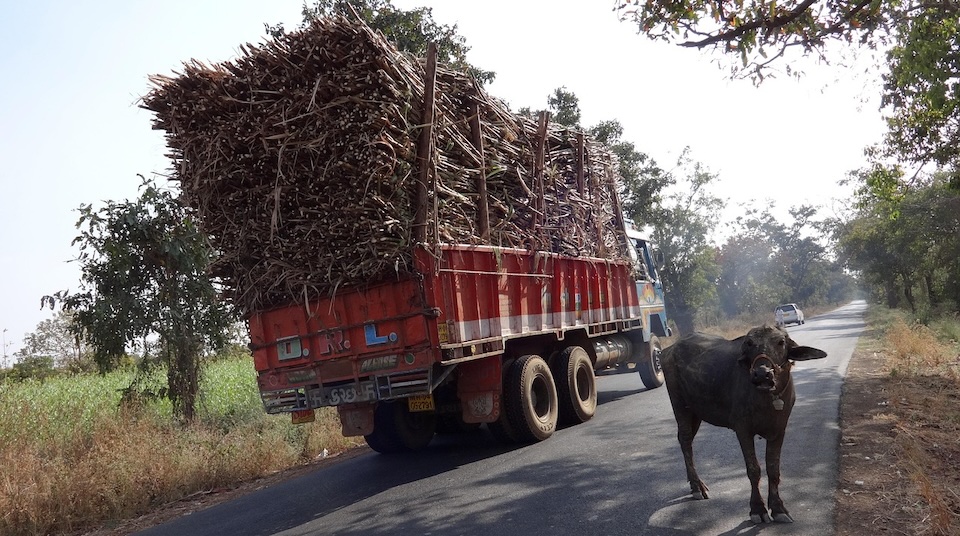
China imported sugarcane volumes have comfortably surpassed the 4-million-tonne mark during the current 2025/2026 crushing season, according to newly released official customs statistics.
May 2026 — According to newly released official customs statistics, April 2026 saw an exceptional volume of sugarcane entering Chinese processing mills through southwestern border ports, capping off a highly active crushing period.
📊 April 2026 Imports Show Sharp Year-Over-Year Growth
Customs figures reveal that China imported 658,400 metric tons of sugarcane from overseas markets in April 2026 alone. This represents a massive year-over-year surge of 350,200 metric tons compared to the 308,200 metric tons imported in April 2025—a remarkable jump of 113.6% in absolute volume, effectively doubling last year’s monthly total.
The overwhelming majority of these shipments cleared customs through land ports in Yunnan, the southwestern Chinese province that shares extensive agricultural trade borders with Myanmar, Laos, and Vietnam.
📅 2025/26 Crushing Season: A Cumulative View
Looking at the broader picture of the current 2025/26 crushing season—which spans from October 2025 through April 2026—China’s total imported sugarcane volume reached 4.0062 million metric tons by the end of April. This marks a solid increase of 600,100 metric tons versus the same period in the previous season.
The geographic breakdown of entry points underscores Yunnan’s absolute strategic monopoly within China’s cross-border sugar supply chain:
-
Yunnan Ports: 3.9404 million metric tons (~98.4% of total national imports)
-
Guangxi Ports: 65,800 metric tons (~1.6% of total national imports)
🗺️ Country of Origin Breakdown
When examining where these imports originated, three Southeast Asian neighbors account for virtually all of China’s overseas sugarcane supply during the 2025/26 season:
| Source Country | Volume (Metric Tons) | Share of Total |
| Myanmar | 2,610,300 | ~65.2% |
| Laos | 1,319,400 | ~32.9% |
| Vietnam | 76,600 | ~1.9% |
Myanmar’s position as the leading supplier reflects the longstanding, structured cross-border agricultural cooperation between Myanmar’s Shan State and Yunnan’s commercial sugar-producing regions. Meanwhile, Laos has steadily expanded its role as a vital secondary supplier through increased cane contract farming.
📈 Year-to-Date Calendar Comparison
Focusing on the first four months of the calendar year, China imported 2.9965 million metric tons of sugarcane between January and April 2026. This figure comfortably exceeds the 2.5302 million metric tons recorded during the same January–April window in 2025, indicating sustained logistics momentum in the cross-border cane trade leading up to the end of the season.
💡 Why This Matters for Global Sugar Markets
The continued upward trajectory of China’s sugarcane imports carries several vital implications for market participants:
-
Domestic Supply Augmentation: China remains one of the world’s largest sugar consumers. Imported cane helps supplement domestic sugar beet and cane output, particularly for Yunnan’s local sugar mills, which rely heavily on crushing raw cane from neighboring countries to maximize capacity utilization.
-
Regional Trade Dependency: With Myanmar and Laos collectively supplying over 98% of overseas cane volume this season, China’s refining industry in the southwest is increasingly tightly integrated with agricultural outcomes in mainland Southeast Asia.
-
Port Infrastructure Criticality: The 98.4% market share held by Yunnan ports highlights the immense infrastructural importance of bilateral border crossings such as those located in Lincang, Dehong, and Xishuangbanna prefectures.
🔮 YnSugar Outlook
As the 2025/26 crushing season draws to a formal close, the data demonstrates that Chinese sugar mills have leveraged imported cross-border cane more aggressively than in the prior year to mitigate domestic deficits.
Whether this elevated trend extends into the upcoming 2026/27 season will depend heavily on local sugarcane yields within Guangxi and Yunnan, localized weather patterns in northern Myanmar and Laos.
Disclaimer: The import volumes, country-of-origin allocations, and market analyses presented in this article are derived from official statistical disclosures by the General Administration of Customs of China (GACC). This content is intended strictly for informational, educational, and reporting purposes and does not constitute commercial trading, financial, or logistics investment advice. While ynsugar.com strives to ensure data consistency, commodity markets are subject to real-time regulatory and seasonal fluctuations. Readers should verify statistics independently before executing supply-chain decisions.