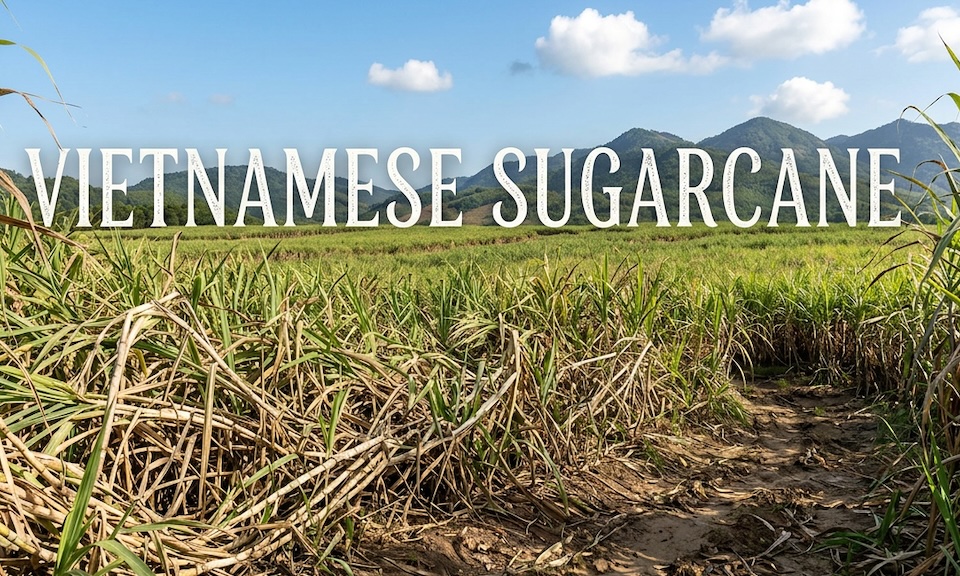
From a three-person Singapore outpost to a billion-dollar multinational, the “Sugar Princess” is rewriting the rules of family business succession in Southeast Asia.
Fifteen years ago, Dang Huynh Uc My made a decision that raised eyebrows in Vietnam’s tight-knit business community. Instead of staying close to the sugarcane fields that had built her family’s fortune, she packed her bags for Singapore to open a tiny office with just three employees. Her mission: chart an international expansion course for AgriS, her family’s sugar company.
It was a gamble that paid off spectacularly.
Today, that modest outpost has evolved into the nerve center of AgriS’s global operations—a strategic pivot that transformed a domestic sugar producer into a diversified agribusiness giant with over $1 billion in annual revenue and exports reaching nearly 80 countries.
Now, as the newly appointed Chairwoman of TTC AgriS, Omi Dang (as she’s known in international circles) is pursuing an even bolder vision: proving that the company’s future cannot be defined by sugar alone.
Born Into a Business Dynasty
The Dang family’s story reads like a classic Asian entrepreneurial saga. In 1979, Dang Van Thanh and his wife Huynh Bich Ngoc launched Thanh Thanh Cong, an alcohol trading company, with just $4,415 in capital and 20 employees. What began as a modest trading operation would eventually become TTC Group, a sprawling conglomerate with six business divisions and more than 120 subsidiaries spanning agriculture, energy, real estate, hospitality, and education.
The elder Dang also co-founded Sacombank, serving as its chairman for 18 years and steering it to become Vietnam’s best-performing bank between 2006 and 2011. The couple earned the nicknames “Sugar King and Queen” as their agricultural operations grew to dominate Vietnam’s sugar industry.
Like many Asian family empires, succession planning involved all four children. The eldest son, Dang Hong Anh, oversees real estate. The third child, Dang Huynh Anh Tuan, manages the group’s tourism portfolio. The youngest, Dang Huynh Thai Son, is pursuing studies abroad.
But it was the second child, Uc My, who would take on the crown jewel: the sugar business.
The Singapore Experiment
When Uc My joined TTC AgriS in 2006, Vietnam’s sugar industry was largely domestic, fragmented, and technologically outdated. She saw an opportunity—and a necessity—to think bigger.
Her Singapore strategy wasn’t just about sales. It was about building credibility with international partners, understanding global commodity markets, and positioning AgriS as a company that could compete on the world stage. The city-state offered proximity to major trading hubs, access to international talent, and a business environment that commanded respect from global institutions.
The bet worked. Over the following decade and a half, AgriS methodically expanded its footprint, establishing supply chains across Vietnam, Laos, Cambodia, and Australia. The company now controls nearly 72,000 hectares of agricultural land and has diversified beyond sugar into coconuts, bananas, rice, and natural nutrition products.
Taking the Helm
In July 2024, the long-anticipated leadership transition became official. Uc My succeeded her mother as Chairwoman of TTC AgriS, formally ending her tenure as the “Sugar Princess” and beginning a new chapter as the company’s chief architect.
“I am satisfied with my decision to hand over the business to Uc My because she is a capable young leader,” Huynh Bich Ngoc said at the time. “This is not only a strategic move but also a necessary step to ensure the sustainable development of TTC AgriS in the future.”
The handover wasn’t merely ceremonial. Under Uc My’s strategic direction, TTC AgriS has transformed into what the company calls “Vietnam’s first Sugar Industry 4.0 enterprise”—a high-tech operation that now commands 46% of the domestic market while shipping products to more than 69 international markets.
Beyond Sugar: The Circular Economy Vision
Perhaps Uc My’s most significant departure from family tradition is her insistence that AgriS cannot remain a sugar company.
“The future of AgriS cannot be defined by sugar alone,” she has stated—a remarkable declaration for someone leading a business built on sugarcane.
Her vision centers on what she calls “circular agriculture”: a model where waste streams become inputs, technology optimizes every stage of production, and sustainability isn’t just a buzzword but a competitive advantage.
The numbers reflect this ambition. While Vietnam has committed to net-zero greenhouse gas emissions by 2050, Uc My has set AgriS’s target for 2035—fifteen years ahead of the national goal. The company has invested heavily in biomass energy, water recycling, and precision agriculture technologies.
This approach has attracted serious attention from international financial institutions. In the past year alone, AgriS has secured $270 million in financing from global institutions including IFC, FCB, and E.SUN Bank. A recent $42 million facility from Italy’s SACE S.p.A and the Netherlands’ ING Bank made AgriS the first Vietnamese agricultural company to meet SACE’s stringent Push Strategy standards.
Building International Bridges
Uc My’s international orientation extends beyond capital markets. In March 2025, during Singaporean Prime Minister Lawrence Wong’s visit to Vietnam, TTC AgriS signed a memorandum of understanding with Nanyang Technological University to collaborate on sustainable high-tech circular agriculture—a ceremony witnessed by both nations’ prime ministers.
The company’s governance credentials have also attracted recognition. AgriS now ranks among the top 20 companies in the Ho Chi Minh Stock Exchange’s VNSI20 sustainability index, the top 10 for corporate governance in Vietnam (VLCA 2023), Forbes Vietnam’s top 50 listed companies for 2024, and the top 5 for board excellence (VIOD).
These accolades matter in a region where family businesses often struggle with transparency and institutional credibility. By adopting international governance standards, Uc My is positioning AgriS to attract the kind of long-term institutional capital that can fuel ambitious expansion plans.
The Road to 2030
Uc My has set a clear target: 60 trillion Vietnamese dong (approximately $2.4 billion) in revenue by 2030—more than doubling the company’s current scale.
Achieving this goal will require continued international expansion, further diversification beyond sugar, and successful execution of the company’s sustainability agenda. It will also require navigating the complex dynamics of a family business where multiple siblings hold significant roles across the broader TTC Group.
But if her track record offers any indication, Uc My has demonstrated a willingness to take calculated risks and the patience to see them through. The Singapore office that once seemed like an unnecessary extravagance is now the foundation of a global operation.
A New Model for Asian Family Business
In many ways, Uc My represents an emerging archetype in Asian business: the Western-educated scion who respects family legacy while pushing for transformation. She combines the long-term thinking that family ownership enables with the professional management practices that institutional investors demand.
Her nearly two decades of experience spanning finance and agriculture have given her credibility that extends beyond her family name. And her willingness to bet on sustainability before it became fashionable has positioned AgriS ahead of regulatory curves that competitors are now scrambling to meet.
The “Sugar Princess” has grown up. And in doing so, she’s showing that the sweetest successions aren’t about preserving the past—they’re about reimagining the future.
YnSugar Expert Take:
Omi Dang represents a new archetype of Asian business leadership. She respects the “Sugar King and Queen” legacy of her parents while adopting the transparent governance and professional management that Western institutional investors demand. For the global sugar market, TTC AgriS is no longer just a supplier; it is a case study in how traditional commodity businesses can survive—and thrive—in the age of sustainability.
Dang Huynh Uc My serves as Chairwoman of TTC AgriS, Vietnam’s largest sugar producer. She joined the company in 2006 and previously served as Vice Chairwoman before assuming the top role in July 2024.