ICE raw sugar futures have climbed above 20 cents per pound, accompanied by one of the most striking shifts in trader positioning in recent years. Speculative investors have rapidly moved from substantial net short positions to net long exposure, while commercial traders have shifted sharply in the opposite direction.
The divergence raises an important question for the global sugar market: can improving supply fundamentals sustain the rally, or could increasingly concentrated speculative positions make prices vulnerable to a correction?
According to the latest Commitments of Traders (COT) report released by the U.S. Commodity Futures Trading Commission (CFTC) on October 9, 2026, non-commercial traders held a net long position of 217,275 contracts in ICE Sugar No. 11 futures as of October 6, an increase of 48,833 contracts from the previous week.
Speculative long positions increased by 45,360 contracts, while short positions declined by 3,473 contracts.
This indicates that the latest increase in net speculative exposure was driven primarily by fresh long positioning rather than short covering alone.
Speculative Positioning Swings by More Than 470,000 Contracts
The speed and scale of the reversal are particularly noteworthy.
On February 17, 2026, non-commercial traders held a net short position of 253,592 contracts. By October 6, that position had reversed to a net long of 217,275 contracts.
The change represents a net positioning swing of 470,867 contracts in less than eight months.
Much of the reversal occurred during the final nine weeks of the period.
Between August 4 and October 6, speculative positioning moved from a net short of 68,468 contracts to a net long of 217,275 contracts, representing a shift of 285,743 contracts.
Historical COT positioning charts show that the current speculative net long remains below the elevated levels recorded in 2016. Nevertheless, the speed of the recent reversal is unusual.
The distinction matters: a rapid increase in net long exposure does not necessarily establish a new historical record in outright speculative positioning.
Commercial Traders Shift Toward Net Short Exposure
Commercial traders have undergone an equally significant reversal.
On February 17, commercial participants held a net long position of 265,824 contracts. By October 6, they had moved to a net short position of 277,344 contracts.
That represents a positioning swing of 543,168 contracts over the same period.
During the week ending October 6 alone, commercial net short exposure increased by 54,423 contracts.
The contrasting movements reflect different trading objectives within the sugar futures market.
Speculative investors may seek to benefit from rising prices, while producers and other physical-market participants use futures to manage exposure to future sugar prices.
As raw sugar prices recovered, some producers and merchants appear to have increased forward selling and hedging activity to secure more favorable pricing.
Producer Hedging Accelerates as Sugar Prices Rise
Market analysis published by Czarnikow provides further evidence of increased producer-side selling.
Its reports identified several notable weekly increases in producer short positions:
- August 18, 2026: Producers added approximately 88,400 short contracts as prices recovered.
- September 1, 2026: Producer short positions increased by approximately 46,300 contracts as raw sugar traded above 18 cents per pound.
- October 6, 2026: Producers added approximately 59,300 short contracts while prices remained above 20 cents per pound.
These figures suggest that producers have become increasingly active in managing forward price exposure as the market strengthened.
Importantly, increased producer selling does not necessarily indicate that the sugar industry expects prices to fall.
For physical sugar producers, short futures positions can serve as a hedge against lower future selling prices rather than an outright bearish market view.
The simultaneous expansion of speculative long positions and producer-side short exposure nonetheless highlights a growing divergence in trading behavior.
The producer positioning figures above are reported by Czarnikow and should not be directly equated with the commercial category in the CFTC Legacy COT report.
Why Are Speculative Funds Buying Raw Sugar?
Several developments have encouraged traders to reassess the outlook for global sugar supply.
Most notably, persistent rainfall across Brazil’s Center-South region has disrupted sugarcane harvesting and milling operations.
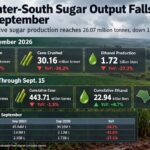
According to production data from Brazil’s Ministry of Agriculture and Livestock (MAPA), Center-South sugar output totaled approximately 2.12 million metric tonnes in the first half of September 2026, down 41.6% year on year.
Cumulative production through mid-September reached approximately 26.07 million tonnes, a decline of 14.4% from the previous season.
The reduced production pace has heightened uncertainty over Brazil’s available sugar supply and the eventual outcome of the 2026/27 crushing season.
This has contributed to the repricing of supply risks in ICE raw sugar futures.
The market’s transition from short covering toward new speculative buying suggests that positioning has become an increasingly important factor behind the rally.
However, futures positioning alone cannot establish whether the global sugar supply-demand balance has fundamentally tightened.
Could the Sugar Market Repeat the 2016 or 2023 Pattern?
Historical sugar market cycles offer a useful perspective.
In both 2016 and 2023, substantial speculative long positions accompanied periods of strong raw sugar prices. Subsequent changes in supply expectations and investment flows were followed by significant price corrections.
The current positioning structure shows some similarities, although market fundamentals and trading conditions are not identical.
A large speculative net long position is not, by itself, a reliable signal that sugar prices are approaching a peak.
If production disruptions in Brazil persist and global supply expectations tighten further, speculative buying could continue to support prices.
Conversely, if weather conditions improve and cane crushing recovers faster than expected, investors may begin reducing long exposure.
Such a reversal could amplify downside price volatility, particularly after an extended period of aggressive buying.
At the same time, additional producer hedging at higher price levels could increase selling pressure on deferred futures contracts.
Outlook: Fundamentals Must Validate the Bullish Positioning
The latest CFTC data indicate that the recent raw sugar rally is no longer driven solely by the unwinding of bearish positions.
Fresh speculative buying has become an increasingly important component of market activity, while commercial traders have moved sharply toward net short exposure.
For sugar market participants, three indicators deserve particular attention:
- Weekly CFTC positioning: Whether speculative net longs continue to expand or begin to decline.
- Commercial hedging activity: Whether producers continue increasing short exposure at elevated prices.
- Brazilian sugar production: Whether upcoming crushing and production figures confirm a sustained supply reduction.
Ultimately, the central question is not simply how much more speculative capital can enter the raw sugar market.
It is whether actual sugar supply fundamentals can justify the increasingly bullish expectations already reflected in futures positioning.
Sources and Methodology
This analysis draws on the following publicly available information:
- U.S. Commodity Futures Trading Commission (CFTC): Legacy Commitments of Traders reports for February 17, August 4 and October 6, 2026.
- Czarnikow / CZ App: Futures and Market Data reports published on August 25, September 7 and October 12, 2026.
- Brazilian Ministry of Agriculture and Livestock (MAPA): Sugarcane crushing and sugar production data through September 15, 2026.
CFTC non-commercial and commercial net positions are calculated as long positions minus short positions under the Legacy Futures Only classification.
Producer positioning figures cited from Czarnikow reflect its market analysis and are not directly interchangeable with CFTC Legacy commercial positioning.
Changes in net futures positions represent differences between reported positions at two dates, not physical sugar purchases or deliveries. They should not be interpreted as equivalent changes in actual sugar demand or supply.
Disclaimer
This article is provided for informational and market research purposes only. It does not constitute investment advice, trading recommendations or a solicitation to buy or sell futures or other financial instruments.
Sugar futures prices are subject to substantial risks arising from weather conditions, supply and demand, currency movements, government policies and speculative trading activity. Readers should conduct their own independent analysis before making commercial or investment decisions.