April 16, 2026 A pair of American investors visited the long-dormant Sasamusa sugar mill in eastern India’s Bihar state on Tuesday, the latest in a series of inspection visits that have fueled growing optimism about the facility’s potential comeback — and about Bihar’s broader push to revitalize its once-thriving sugar sector.
A Mill With Deep Roots
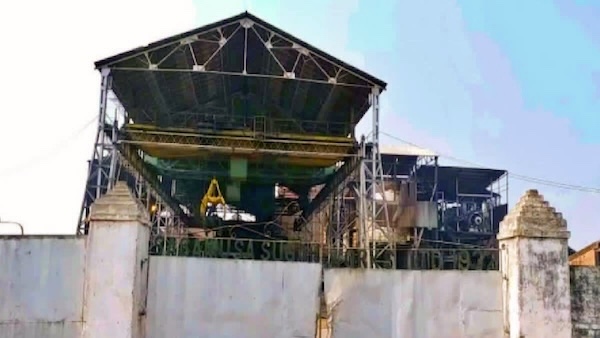
The Sasamusa sugar mill, located in Gopalganj district along the Gandak River basin in northwestern Bihar, dates back to 1932 during British colonial rule. For decades, it served as an industrial anchor for the surrounding agricultural communities, providing a reliable market for local sugarcane farmers and employment for hundreds of workers.
But the mill’s fortunes took a sharp downturn. Financial troubles began mounting around 2015, with unpaid dues to sugarcane growers piling up steadily. A fatal industrial accident in 2018 that killed nine workers forced the facility to shut down. Although operations briefly resumed for roughly ten days in 2019, the mill has remained closed ever since, leaving farmers without a major buyer and workers without livelihoods.
US Investors See “Strong Potential”
The visiting investors, Malik and Ashraf, conducted a thorough walkthrough of the plant on Tuesday, examining the machinery, factory buildings, warehouses, the boiler unit, and the sugarcane procurement center, according to a report by the Hindi-language daily Hindustan.
The two also met with local officials and residents to better understand the operational and logistical challenges that would need to be addressed before any restart.
Malik told reporters that the mill had once been the economic backbone for farmers and workers across the region and that he saw “strong potential” for it to become operational again. Ashraf emphasized that reviving the facility would help ensure fair prices for farmers’ produce while generating much-needed employment at the local level.
Fourth Inspection Team — and Counting
Local officials noted that Malik and Ashraf represent the fourth group of investors to inspect the Sasamusa facility in recent months, reflecting a notable uptick in interest.
In February 2026, the Bihar state government assigned the mill’s revival to the MRN Group, a Karnataka-based industrial conglomerate. MRN founder and chairman Murugesh Nirani, accompanied by Senthil Kumar, the additional chief secretary of Bihar’s sugarcane industries department, personally visited the site. Nirani signaled ambitions beyond traditional sugar production, stating that “running just a sugar mill is not enough” and that the group was exploring the manufacture of bio-products to maximize benefits for local farmers.
In March, representatives from the Tirhut Industries Group and Two Sigma, a private company based in Maharashtra, also assessed the plant’s assets and discussed the feasibility of resuming operations. Later that month, an Australian industrial group conducted its own inspection.
Previous visiting teams had flagged a shortage of available land as a key obstacle. Despite that, each successive visit has been viewed locally as a positive sign, and the latest American interest has further buoyed expectations.
Part of a Larger State Strategy
The flurry of investor activity around Sasamusa is not happening in a vacuum. It is part of an ambitious, state-backed effort to overhaul Bihar’s sugar industry from the ground up.
In November 2025, the Bihar state cabinet approved a sweeping plan to restart nine shuttered sugar mills and construct 25 new ones across the state. The initiative falls under the government’s “Saat Nischay-3” (Seven Resolves-3) policy framework, which aims to drive industrial development and rural prosperity.
The plan also carries backing from India’s highest levels of government. Federal Home Minister Amit Shah has publicly pledged that all closed sugar mills in Bihar would be revived within five years, framing the effort as a commitment to farmers’ welfare.
Beyond Sugar: Ethanol and Diversification
Notably, the revival discussions are not limited to conventional sugar manufacturing. Multiple investor groups have explored the possibility of producing ethanol and other agricultural byproducts on-site — a move that would align with India’s national push to expand ethanol blending in fuel and reduce dependence on crude oil imports.
If negotiations and preparations proceed smoothly, preliminary plans suggest the Sasamusa mill could resume production during the 2026–27 season.
Local Leaders Rally Behind Revival
Political support on the ground appears firm. Pramod Kumar Patel, a local leader from the ruling Janata Dal (United) party, welcomed the American investors’ visit and pledged full cooperation in efforts to bring the mill back to life.
For the farmers and residents of Gopalganj, who have watched the mill sit idle for the better part of a decade, the steady stream of investors walking through its gates represents something they have not felt in years: hope.
Sources: Hindustan, ChiniMandi
Ynsugar Outlook
The Ethanol Arbitrage: India’s Shuttered Mills Find New Life
The recurring interest in Sasamusa — now drawing its fourth international delegation — highlights a structural shift in the Indian sugar sector. Investors are no longer just buying a sugar factory; they are acquiring a bio-energy hub. Under India’s E20 mandate, these shuttered assets in Bihar offer a unique “brownfield” entry point into the lucrative ethanol market. However, the recurring “land shortage” issue flagged by previous teams remains the primary execution risk. If the US or Australian groups can solve the logistical gridlock, Sasamusa could set the blueprint for the 25 new mills Bihar aims to build.