Effective sugarcane borer management 2026 requires a precise understanding of the May peak flight window…
By the YnSugar Analysis Team | Technical Support: National Sugarcane Industry Technology System | May 9, 2026
Based on adult moth trapping data, climate-based degree-day prediction models, and recent field surveys across sugarcane-growing regions.
I. Key Pest Species and Outbreak Forecast
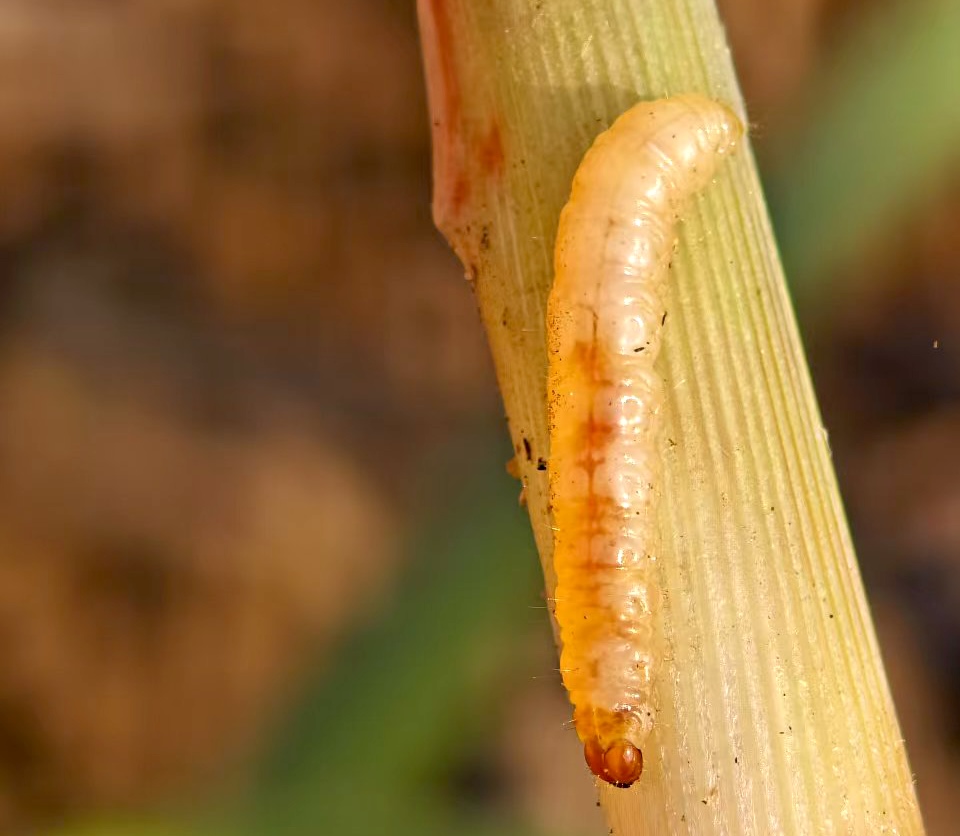
Primary species: The yellow sugarcane borer (Argyroploce schistaceana) and the two-spotted borer (Chilo infuscatellus) are widespread across all major growing zones. The striped borer (Chilo sacchariphagus) is showing elevated pressure in localized areas.
Seasonal outlook: Based on first-generation adult moth peak emergence calculations combined with degree-day accumulation models, peak moth flight in most major growing zones is projected for early May. In cooler zones, peak flight is expected in mid-May.
II. Control and Management Recommendations
1. Soil-Applied Insecticides — Correct Product, Rate, and Timing
(1) Active ingredients: Select granular insecticides or fertilizer-insecticide blends containing one or more of the following systemic active ingredients effective against borers: monosultap (单杀虫), bisultap, or chlorantraniliprole.
(2) Application rates (per mu, calculated as pure active ingredient):
-
Monosultap: 300 g/mu
-
Bisultap: 360 g/mu
-
Chlorantraniliprole: 40 g/mu
When a formulation contains two or more active ingredients, individual rates may be proportionally reduced. Consult your local plant protection extension service, agronomist, or professional pesticide distributor for specific guidance.
(3) Optimal application window: Late April through early May.
⚠ Note: In fields where granular insecticides or fertilizer-insecticide blends were applied in February or earlier — if the current dead-heart rate from borer damage exceeds 10% — a supplemental full-rate application is recommended in early May.
2. Foliar Spray Applications
(1) Application windows:
-
Southern growing zones: Late April to early May
-
Central and northern zones: Mid- to late May
-
Adjust timing based on local first-generation moth flight peaks and prevailing weather conditions.
(2) Recommended base tank mix:
Abamectin (or emamectin benzoate) + Chlorantraniliprole + Thiamethoxam (or Clothianidin)
(3) Application rates (per mu, pure active ingredient):
-
Abamectin: 5 g/mu
-
Emamectin benzoate: 2 g/mu
-
Chlorantraniliprole: 5 g/mu
-
Thiamethoxam: 20 g/mu
-
Clothianidin: 40 g/mu
(4) Spray adjuvants: Commonly used adjuvants include organosilicone surfactants (standard use), polymer adjuvants, and crop protection protein-film adjuvants. Selecting the right adjuvant can improve efficacy by 20–30% and extend residual activity. Consult local extension services or professional distributors for recommendations.
3. Pheromone Traps for Population Suppression — Pre-Canopy Closure Fields
Sex pheromone traps offer several advantages for borer management before canopy closure:
-
Broad-spectrum: Controls all three major borer species simultaneously (yellow borer, striped borer, two-spotted borer)
-
Long-lasting: Active attractant life of 90 days per lure
-
High efficiency: One trap station covers 2–3 mu
-
Compatible: Can be integrated with insecticide programs and Trichogramma parasitoid releases
-
Safe: Approved for use in AA-grade Green Certification food production; no adverse effects on beneficial insects
-
Cost-effective: Approximately ¥15 per mu
Recommended deployment: In fields that have not yet reached canopy closure, and in seed cane nurseries planted in May, pheromone traps should be deployed across contiguous blocks of 100+ mu. Area-wide trap deployment suppresses baseline moth populations and complements insecticide programs, establishing the foundation for sustained season-long borer pressure reduction.
III. Important Field Notes
1. A Critical Window for Building Your “Insecticide Defense Line”
Since April 16, much of Guangxi’s sugarcane region has entered its rainy season. Favorable soil moisture conditions make this an ideal time for inter-row cultivation, hilling, and fertilization — and critically, this is the key window for soil insecticide application to establish a protective chemical barrier against second-generation borers.
Fields that have not yet received soil insecticide treatment should apply promptly after rainfall.
⚠ Note: In fields where granular insecticides or fertilizer-insecticide blends were applied in February or earlier — if the dead-heart rate currently exceeds 10% — a supplemental full-rate soil application is recommended in early May.
2. Spray Timing, Water Volume, and Foliar Nutrition
Success with foliar sprays depends on timing, formulation, rates, adjuvant selection, and application quality.
(1) Spray timing: Apply in the late afternoon (after 4:00 PM) or at night (for drone applications) to minimize UV photodegradation and rapid evaporation, maximizing coverage and residual efficacy.
(2) Water volume:
-
Manual/ground spraying: ≥ 45 L/mu (3+ tank loads)
-
Drone application: Use appropriate adjuvants and optimize droplet size to ensure spray penetrates into the leaf whorl and leaf sheath interior for best results.
(3) Foliar fertilizers: Apply foliar nutrients based on crop vigor:
-
Healthy, vigorous fields: Monopotassium phosphate (MKP) or urea
-
Weak or stressed fields: Amino acid-based foliar fertilizers preferred
Consult an agronomist or professional advisor for tailored recommendations.
IV. Integrated Management Philosophy: Suppress — Defend — Control
Dr. Huang Chenghua’s research team at the National Sugarcane Industry Technology System has developed a three-stage integrated pest management (IPM) framework based on borer biology, field conditions, and the practical windows for intervention:
Stage 1 — “Suppress the Base Population” (November–March) — Foundation
Deploy integrated measures including pheromone traps, insecticides, and cultural practices (low-cut harvesting, leaf shredding, field burning) to control overwintering and first-generation borers. Reducing the starting population early in the season protects seedling-stage stands and sets the stage for effective season-long management.
Stage 2 — “Build the Defense Line” (April–May) — The Critical Phase
Coordinate soil insecticide applications with inter-row cultivation and hilling across the entire growing area. In high-infestation or chronically dry zones, layer on pheromone trap deployment and drone spray applications. The goal is to establish a systemic chemical barrier in the soil during May–June to prevent borers from establishing during the grand growth phase — this is the single most impactful step in reducing season-wide infestation rates.
Stage 3 — “Hold the Line” (July–September) — Insurance
Monitor moth trap counts and conduct field surveys in mid-to-late season. Where borer pressure remains high, execute drone spray operations to protect the current crop and simultaneously suppress next year’s overwintering population. Combine with “one-spray, multi-benefit” tank mixes (insecticide + crop nutrition + plant growth regulators) to simultaneously control pests and disease, boost yield and sugar content, and nourish ratoon development.
Disclaimer: The pest management recommendations, pesticide products, application rates, and timing guidelines presented in this article are based on field conditions, registered agrochemicals, and regulatory frameworks specific to sugarcane-growing regions in Asia (primarily southern China). Pest species, infestation patterns, climate conditions, approved pesticides, and agricultural practices vary significantly by country and region. This content is provided for reference purposes only and should not be applied directly without consulting local plant protection authorities, licensed agronomists, or certified pesticide advisors in your area. Always follow your local regulations regarding pesticide registration, use, and safety.

Meet the YnSugar Team at Guangxi Sugar Expo 2026
As part of our commitment to global sugar industry analysis, the YnSugar team will be present at the 19th Guangxi International Sugar Industry Technology & Smart Equipment Exhibition. This is the premier event to understand China’s technological leap in sugarcane processing.
Plan Your Visit:
-
When: July 24-26, 2026
-
Where: Hall D, Level 2, Nanning International Convention & Exhibition Center
-
Inquiries: [email protected]