As the backbone of China’s sugar sector, the Guangxi sugarcane industry is more than just a regional agricultural powerhouse; it is a critical pillar of national food security. However, as global competition intensifies and domestic production costs soar, this traditional industry has reached a pivotal inflection point.
This analysis provides a comprehensive diagnosis of Guangxi’s current industrial landscape, its inherent advantages, and the systemic challenges it must overcome to reshape its core competitiveness.
1. The Industrial Foundation: Scale, Concentration, and the Rise of Local Varieties
The fundamentals of Guangxi’s sugar sector remain robust, characterized by a “Stable Total, High Concentration, and New Varieties” framework.
-
National Dominance: In 2024, Guangxi’s sugarcane planting area reached 785,700 hectares, with total output stabilizing above 62 million tonnes. This accounts for over 60% of China’s total sugar production.
-
Strategic Clusters: Production is highly concentrated in Central and Southern Guangxi. Five core regions—Chongzuo, Laibin, Nanning, Liuzhou, and Baise—contribute the bulk of the supply. Chongzuo, known as the “Sugar Capital of China,” alone boasts a planting area (272,600 hectares) exceeding that of many entire provinces.
-
The Variety Breakthrough: Years of R&D have shifted the industry from reliance on imported varieties to domestic dominance. Local series such as Guitang and Guiliu now account for 91.04% of the total area, providing superior yields, sugar content, and climate adaptability.
2. Strategic Advantages: Nature Meets Policy
Guangxi’s success is built on the dual pillars of natural endowment and consistent policy support.
-
The Tropical Advantage: Bisected by the Tropic of Cancer, Guangxi offers the ideal mix of abundant sunlight, high rainfall, and fertile soil. The synchronized heat and rain cycles perfectly match the sugarcane growth rhythm, while significant day-night temperature differences in autumn serve as a “natural catalyst” for sugar accumulation.
-
Policy Empowerment: Targeted subsidies for elite seeds and machinery, alongside the establishment of “Sugarcane Production Protection Zones,” have effectively hedged against market risks and stabilized farmer expectations.
3. The Transformation Crisis: Costs, Structure, and Efficiency
Despite its scale, the Guangxi sugarcane industry faces a “bottleneck” created by rising costs and structural rigidities.
-
The Cost Trap: Labor shortages in rural areas have pushed manual labor costs to over 60% of total production expenses. With the rise in fertilizer and pesticide prices outstripping the increase in cane purchase prices, profit margins for farmers are being severely squeezed.
-
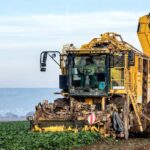
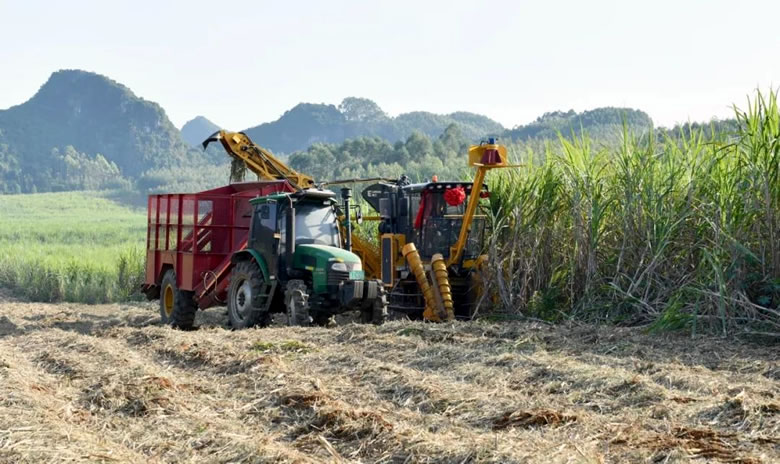
Low Mechanization Rates: Mechanization is the only viable path to cost reduction. Currently, Guangxi’s comprehensive mechanical harvesting rate stands at only 31.03%, far below global peers like Brazil. Hilly terrain and fragmented plots remain the “last mile” obstacles.
-
Underdeveloped Value Chain: Value creation is still largely confined to primary sugar processing. Development of high-value-added products (functional sugars, derivatives) lags behind, and the utilization of by-products like bagasse and molasses remains in the primary stages.
4. The Roadmap: Systemic Upgrades for Systemic Challenges
To overcome these hurdles, Guangxi is shifting from incremental improvements to a systemic overhaul of its industrial model.
A. Precision Policy & Risk Management
The focus is shifting from general subsidies to precise incentives for seed promotion and smart machinery. New risk management tools, such as the “Insurance + Futures” model, are being explored to build a buffer against global price volatility.
B. Diversification of Varieties
Breeding goals are expanding beyond “High Yield & High Sugar” to include traits like “Harvest-Ready Architecture” and “Climate Resilience.” Utilizing molecular breeding will accelerate the iteration of varieties suited for mechanical harvesting.
C. The Mechanization War
The industry is prioritizing the development of small, intelligent harvesting machinery tailored for hilly terrains. The goal is a leapfrog increase in mechanical harvesting rates by the end of the “15th Five-Year Plan” (2030).
D. The “Bio-Manufacturer” Pivot
Sugar companies are being encouraged to transform into integrated manufacturers of “Sugar + Bio-materials + Bio-energy.” This includes using bagasse for eco-friendly packaging and molasses for high-value fermentation, creating a green circular economy.
Conclusion: From Scale Advantage to Quality Leadership
The Guangxi sugarcane industry is transitioning from a period of “quantity accumulation” to “quality breakthrough.” Its future no longer depends solely on natural resources, but on technological innovation and full-chain synergy. By embracing this systemic change, Guangxi will not only protect its title as China’s “Sugar Bowl” but also set a new global paradigm for sustainable, high-quality sugar production.