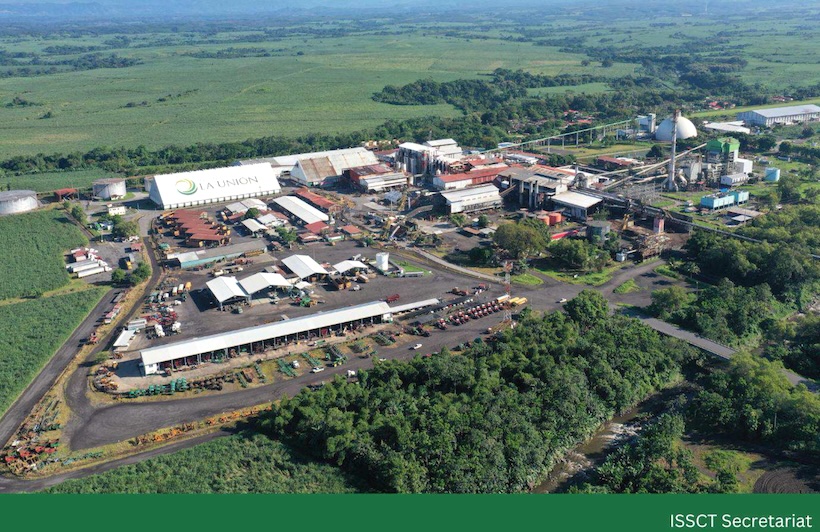
In the modern bioeconomy, sugarcane byproducts are rapidly transforming traditional sugar processing from commodity manufacturing into multi-revenue biorefineries. While the mill value chain historically focused on centrifugal sugar, global producers are now pivoting toward high-value non-sugar revenue streams.
According to the June 2026 bulletin from the International Society of Sugar Cane Technologists (ISSCT), global sugarcane cultivated area stands at approximately 27 million hectares, supplying over 80% of the world’s commercial sugar while serving as a foundational feedstock for advanced biofuels and bio-based industrial materials. Today, major producing nations—Brazil, India, and Thailand—are pioneering new technological frontiers, transforming sugarcane waste streams into asphalt additives, bio-crude oils, and grid-scale power generation.
The future competitive landscape for sugar producers is shifting. Industry leadership will no longer be measured solely by sugar extraction yield per ton of cane (CCS), but by total non-sugar revenue created per harvested hectare.
1. Sugarcane Byproducts in Road Construction: Brazil’s Bagasse Ash Trial
Brazil, the world’s leading sugarcane producer and pioneer in the integrated sugar-ethanol industry, is actively testing low-carbon infrastructure applications for sugarcane residual waste.
According to the ISSCT report, Brazilian researchers are evaluating the integration of sugarcane bagasse ash (SCBA) into asphalt paving mixtures along an experimental road section in Paraná state. SCBA is derived from the high-temperature combustion of bagasse in mill co-generation boilers. The initiative aims to align industrial waste management with civil engineering performance standards and carbon reduction targets.
Industrial Synergies: Diverting sugarcane bagasse ash from land disposal into green asphalt paving provides mills with an auxiliary bio-construction material stream while cutting civil engineering carbon footprints.
The strategic value of this project lies not in immediate, full-scale replacement of traditional bitumen, but in establishing a novel industrial synergy. Sugarcane byproducts are transitioning from internal circular consumption to external supply chains for green construction materials. However, commercial viability remains subject to ongoing field trials assessing material structural stability, optimal mix ratios, regional freight costs, and standardization compliance.
2. Bioethanol for Grid Power: Expanding Beyond the Fuel Tank
While bioethanol is traditionally recognized as a transport fuel closely tied to crude oil parity, federal blending mandates, and mill ethanol-to-sugar parity ratios, Brazil is pushing bioethanol into utility-scale power generation.
The ISSCT bulletin highlights operational testing at the Suape II thermal power plant, where infrastructure modifications have been completed to evaluate large-scale, near 100% ethanol-fueled engine applications for baseload and peak-load power generation.
If commercially validated, direct power generation creates a vital third demand vector for bioethanol. Rather than forcing mills to choose exclusively between sugar and transport fuel, bioethanol could serve dynamic roles in grid stabilization and emergency energy reserves. For global physical sugar markets, expanded ethanol utility adds complexity to raw cane allocation, directly influencing sugar supply flexibility and international trade flows.
3. High-Yield Bio-Crude Oil: India’s Waste Valorization Breakthrough
Among recent technological advances, process developments in India demonstrate significant potential for commercial-scale biomass conversion.
Reports indicate that a research team at the CSIR-Indian Institute of Chemical Technology (CSIR-IICT) applied catalytic hydrothermal liquefaction (HTL) to sugarcane bagasse and field residues, achieving a notable bio-oil yield of 52.8%. The resulting bio-crude demonstrates an energy density of 39–43 MJ/kg, with preliminary life-cycle assessments showing an ~8% reduction in global warming impact relative to conventional processing benchmarks. Feasibility modeling cited an estimated return on investment (ROI) approaching 17.6%.
| Key Metric / Parameter | CSIR-IICT Research Data | Strategic Industry Implication |
|---|---|---|
| Conversion Process | Catalytic Hydrothermal Liquefaction (HTL) | Converts high-moisture cellulosic waste directly |
| Bio-Oil Yield | 52.8% (Bench Scale) | Significantly improves carbon conversion efficiency |
| Energy Density | 39 – 43 MJ/kg | Approaches heavy fuel oil energy benchmarks |
| Available Waste Scale (India) | 90 – 100 Million Metric Tons/Year | Unlocks massive domestic bio-refinery feedstocks |
With India generating an estimated 90 to 100 million metric tons of surplus sugarcane agricultural residue annually, the strategic imperative is clear: valorizing raw cellulosic waste into high-value chemical and energy intermediate products. However, transitioning from HTL laboratory parameters to commercial operations requires overcoming substantial industrial hurdles, including biomass collection logistics, continuous reactor feeding, capital expenditure constraints, and environmental compliance. Yield metrics of 52.8% remain experimental benchmarks and should not be interpreted as guaranteed commercial financial returns.
4. Turning Field Straw into Fuel: Thailand’s Solution to Crop Burning
Unlike bagasse, which naturally consolidates at processing plants, sugarcane tops and leaves (trash) remain widely dispersed across fields, creating severe logistical and environmental challenges.
To address open-field burning and air pollution, researchers at Khon Kaen University in Thailand developed a mobile fast-pyrolysis reactor capable of converting sugarcane trash into liquid bio-oil, with a design capacity reaching 1,000 liters per day. Operating under high-temperature, oxygen-deprived conditions, the system yields bio-oil for thermal application along with high-carbon biochar for agricultural soil conditioning.
This initiative directly targets a key agricultural bottleneck: high field gathering and transportation costs that historically drove growers to burn crop field residues. Establishing a closed-loop framework—Field Gathering → Centralized Pyrolysis → Liquid Biofuel → Biochar Soil Restitution—transforms field management expenses into an additional revenue-generating biomass asset class.
Nevertheless, daily pilot outputs of 1,000 liters represent early-stage demonstration capabilities. Widespread commercial deployment depends on reducing per-ton collection, baling, and transport logistics costs to ensure a reliable feedstock pipeline.
5. Industry Transformation: From Sugar Mill to Integrated Biorefinery
While technical pathways across Brazil, India, and Thailand vary, they converge on a single overarching market trend: the sugar sector is evolving from traditional food commodity manufacturing into a multi-product biomass valorization industry.
Historically, byproduct utilization focused on internal cost-cutting, steam generation, and waste compliance. Moving forward, competitive performance will depend on commercializing high-value non-sugar product lines. For major sugar-producing regions, established foundations in bagasse power generation, molasses-to-ethanol, and filter cake soil applications provide a solid base for further technical upgrade.
Strategic Growth Imperatives for Modern Bio-Sugar Enterprises:
- High-Value Biomass Conversion: Transitioning surplus bagasse into advanced aviation fuels (SAF), bio-based materials, and green construction components.
- Low-Cost Field Logistics: Developing mechanized harvesting, baling, and regional collection networks for sugarcane leaves and trash to minimize open burning.
- Multi-Energy Output Synergy: Building flexible mill operational models capable of dynamic shifting between commercial sugar, hydrous/anhydrous bioethanol, thermal energy, power, and biochemical outputs.
- Monetization via Green Finance: Integrating waste valorization into carbon credit markets, green financing instruments, and rural income generation initiatives.
Sugar commodity prices remain inherently cyclical, driven by weather patterns and international market dynamics. However, resource conversion efficiency offers sustainable, long-term operational resilience. The future of global sugar will be dictated not only by raw sugar recovery rates, but by the comprehensive market value extracted from every ton of processed sugarcane.
Editorial Note & Contextual Disclaimer:
This analytical report is synthesized based on technical publications from the International Society of Sugar Cane Technologists (ISSCT) June 2026 Bulletin and verified institutional research updates. Experimental pilot projects cited—including Brazilian bagasse ash asphalt trials, thermal power bioethanol testing, and Thai mobile pyrolysis units—represent demonstration-stage evaluations. Process yields (such as the 52.8% bio-oil recovery cited by CSIR-IICT) reflect controlled research conditions and should not be construed as guaranteed performance metrics or direct commercial financial projections for full-scale industrial operations.