Strategic Pathways for Yunnan Sugar Enterprises in Developing Cross-Border Sugarcane Substitution in Northern Myanmar…in 2025, Yunnan sugar enterprises imported 2.3766 million tons of sugarcane from Myanmar, reflecting a year-on-year increase of 861,500 tons and accounting for 66.19% of the province’s total cane imports.
Abstract
The transformation of northern Myanmar’s borderlands from a region historically associated with illicit cultivation into a functioning agricultural supply zone for Yunnan Province’s sugar industry represents one of the most consequential examples of cross-border development cooperation in mainland Southeast Asia. According to the latest customs statistics, during the first five months of the 2025/26 crushing season (October through February), Yunnan imported a cumulative 2.54 million tons of sugarcane, an 8.6% year-on-year increase, with full-season imports projected to reach 3.75 million tons. Myanmar accounts for 63% of this volume and Laos 35%, with the imported cane yielding over 450,000 tons of refined sugar—approximately 17% of Yunnan’s total sugar output. These figures confirm that the cross-border sugarcane substitution program first conceived in the late 1990s has reached operational maturity. This paper examines the strategic landscape facing Yunnan’s sugar enterprises operating in northern Myanmar, analyzes the structural strengths and constraints of the current model, and proposes an integrated strategy framework for the next phase of high-quality development.
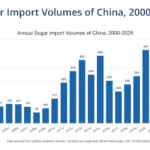
Table 1: China’s Total Sugarcane Imports (2015–2026)
(Source: General Administration of Customs)
| Year | Total China Imports (10k tons) |
| 2015 | 105.41 |
| 2016 | 80.70 |
| 2017 | 98.59 |
| 2018 | 118.40 |
| 2019 | 141.62 |
| 2020 | 170.55 |
| 2021 | 177.00 |
| 2022 | 215.04 |
| 2023 | 190.90 |
| 2024 | 298.41 |
| 2025 | 359.07 |
| 2026 (Jan–Feb) | 153.32 |
1. Introduction: From Concept to Operational Reality
The development of cross-border sugarcane substitution in northern Myanmar emerged from a convergence of policy objectives that crystallized in the late 1990s: narcotics interdiction in the Golden Triangle, poverty alleviation in border-adjacent communities, and the structural need to supplement Yunnan’s domestic sugarcane supply. Nearly three decades later, the program has produced measurable results. The 5,000 Myanmar farming households who transitioned to sugarcane cultivation under Chinese enterprise contracts have collectively delivered over 2370,000 tons of crushed cane in 2025 alone, generating an average per capita income increase of 14,000 yuan per year for participating cultivators.
Yet the program now stands at a critical inflection point. The internal advantages that drove early growth—favorable subtropical climate, abundant land, low labor costs, and proximity to Yunnan’s milling capacity—must now contend with intensifying internal constraints, including political volatility in Myanmar’s border regions, fragile local economic conditions, inadequate infrastructure, and persistent shortages of agricultural extension personnel. External conditions present a more complex picture: the Belt and Road Initiative and Yunnan’s positioning as a regional radiating hub for South and Southeast Asia have created favorable cooperation frameworks, while China’s persistent sugar supply-demand gap guarantees stable downstream demand. At the same time, global sugar price volatility and natural disaster risk inject substantial uncertainty into the value chain.
This paper argues that the next phase of development requires a deliberate strategic reorientation organized around four pillars: leveraging structural advantages through deeper international cooperation; addressing developmental weaknesses through targeted infrastructure and human capital investment; capturing market opportunities through regional integration mechanisms; and managing systemic risks through technological and institutional innovation.
2. Strategic Pillar One: Leveraging Advantages Through Enhanced International Cooperation
Northern Myanmar possesses natural endowments that Chinese mainland sugarcane regions cannot easily replicate. Its tropical and subtropical climate, varied topography suitable for upland cultivation, and labor cost structure offer comparative advantages that, when properly developed, can elevate the entire cross-border value chain.
A coherent strategy begins with deepening engagement with international financial institutions and strengthening relationships with neighboring countries—particularly Thailand and other regional partners whose own sugar industries offer complementary expertise. Chinese sugar enterprises, working under bilateral cooperation frameworks, should expand their footprint in northern Myanmar by transferring proven cultivation techniques and management practices that have been refined in Yunnan and Guangxi over decades. The objective is to shift local cultivation from extensive, low-input methods toward scientifically managed production systems capable of delivering higher yields and superior cane quality.
This transformation serves multiple constituencies simultaneously. For Chinese mills, it expands the raw material supply base while improving sucrose recovery rates. For Myanmar farmers, it raises productivity per hectare and stabilizes incomes. For both governments, it deepens economic interdependence and reinforces the people-to-people bonds that underpin durable bilateral relations. Properly executed, the sugarcane sector can serve as a flagship demonstration of China-Myanmar agricultural cooperation, delivering tangible benefits that strengthen the political case for continued cross-border integration.
3. Strategic Pillar Two: Addressing Weaknesses Through Targeted Investment
3.1 Infrastructure Development
The single most binding constraint on the expansion of sugarcane substitution in northern Myanmar is the inadequate state of physical infrastructure. Roads connecting cane-growing zones to border crossings are frequently in poor condition, with damaged bridges and narrow carriageways limiting truck capacity during peak harvest periods. Communication networks remain unreliable, complicating coordination between mills and field operations. Electrical supply is intermittent in many growing areas, restricting the deployment of mechanized equipment and post-harvest handling facilities.
Resolving these constraints requires sustained joint investment by Chinese enterprises and the Myanmar government, ideally supplemented by multilateral development finance. Priority investments include reconstruction of damaged roads and bridges along key transport corridors, road widening to accommodate heavy cane trucks, network upgrades to support digital coordination, and the establishment of dedicated sugarcane financing windows at participating commercial banks. Such financing windows would address one of the most persistent operational challenges: smallholder cash flow during the long interval between planting and first harvest.
3.2 Human Capital and Technical Training
Infrastructure alone cannot deliver high-quality development without parallel investment in human capital. Northern Myanmar currently lacks sufficient agricultural extension personnel, trained technical specialists, and enterprise managers familiar with modern sugar industry practices. Closing this gap requires structured cooperation with Chinese agricultural research institutions, universities, and border-region agricultural schools.
A practical model would involve joint training programs in which selected Myanmar candidates receive technical education at partner institutions in Yunnan, returning to serve as extension officers and technical staff in their home districts. Complementing this longer-term pipeline, regular on-site training programs for Myanmar cane farmers should be established as a permanent feature of the cross-border cooperation architecture. These programs would cover soil preparation, variety selection, fertilizer application, pest and disease management, and harvest scheduling—the practical knowledge that determines the gap between marginal and high-performing operations.
4. Strategic Pillar Three: Capturing Opportunities Through Regional Integration
4.1 Deepening Regional Economic Cooperation
The regional architecture surrounding northern Myanmar—including the ASEAN Free Trade Area and the Regional Comprehensive Economic Partnership (RCEP)—offers underutilized mechanisms for streamlining cross-border sugar trade. Customs inspection procedures for sugar products entering China from Myanmar can be simplified through bilateral coordination, reducing transit times and lowering compliance costs. Joint development of cross-border agricultural industrial parks, in cooperation with sugar-producing regions in Yunnan and Guangxi, would enable resource sharing, complementary specialization, and integrated value-chain development.
The China-Myanmar Economic Corridor framework provides a particularly relevant platform. As corridor projects advance, transportation costs for sugarcane and refined sugar products should decline and transit times should compress, improving the economics of the cross-border trade and enabling expansion into more distant cane-growing zones that are currently uneconomic to serve.
4.2 Leveraging Digital Platforms
The Digital Silk Road initiative offers another vector for strategic positioning. Cross-border e-commerce platforms can be developed to connect Myanmar producers with Chinese buyers in segments beyond raw cane—including specialty sugars, brown sugar products, and value-added derivatives. Equally important is the use of digital media to communicate the story of the substitution program: video and photographic documentation of the full cycle from planting through harvest to delivery at Chinese mills can build public understanding of the program’s achievements, attract additional investment from Chinese and international enterprises, and reinforce the program’s legitimacy with both domestic and international audiences.
5. Strategic Pillar Four: Risk Management and Institutional Innovation
5.1 Market Risk Early Warning Systems
The cross-border sugarcane sector faces multiple price and policy risks that can be partially mitigated through systematic data infrastructure. A dedicated “Sugar Industry Big Data Early Warning System” oriented toward the northern Myanmar border region would aggregate data on international sugar prices, domestic Chinese cane procurement prices, policy developments affecting cross-border non-grain agricultural trade, and crushing-season production capacity.
By integrating these data streams, the system can generate forward indicators of raw material gaps, supply-demand imbalances, and price inflection points—enabling farmers and enterprises to adjust planting decisions, harvesting schedules, and inventory positions before adverse conditions fully materialize. Such early warning capabilities are particularly valuable for smallholder farmers, who typically lack independent access to market intelligence and bear disproportionate consequences from price shocks.
5.2 Strengthening the Agricultural Insurance System
Insurance innovation has emerged as one of the most impactful institutional developments in the cross-border sugarcane sector. Lincang Customs in Yunnan Province pioneered a tariff guarantee insurance model specifically designed for cross-border sugarcane imports. Under this arrangement, sugarcane importing enterprises can use an insurance policy in lieu of cash deposits, enabling a “release first, pay duties later” customs clearance procedure that materially improves cash flow during peak crushing periods.
Equally significant is the development of comprehensive disaster insurance covering typhoons, drought, and pest infestations. The 2024 typhoon disaster in northern Myanmar provides a compelling demonstration of this system’s value: enterprise-insured sugarcane bases covering 5,733 hectares received 120 million yuan in insurance compensation, reducing per-hectare farmer losses from 31,500 yuan to 5,700 yuan—a more than five-fold improvement in disaster resilience. Extending this insurance architecture to cover a larger share of cultivated area, and incorporating new risk categories as climate volatility intensifies, should be a priority for the next development phase.
6. Strategic Synthesis and Outlook
The cross-border sugarcane substitution sector in northern Myanmar rests on substantial foundations. Internal advantages are concentrated in three domains: the natural endowment of tropical and subtropical climate well-suited to sugarcane cultivation; the maturity of the China-Myanmar cooperation model, which has successfully integrated 5,000 Myanmar farming households into a structured commercial cane economy; and the demonstrated economic and social returns, with 2025 crushing volumes exceeding 2370,000 tons translating into per capita annual income gains of 14,000 yuan for participating farmers and broader social development outcomes that extend beyond direct income to encompass education, health, and community infrastructure.
These achievements coexist with persistent constraints that demand strategic attention. Political instability disrupts normal operations in some growing zones. The fragile local economy and underdeveloped infrastructure constrain the pace of scale expansion. Shortages of agricultural extension personnel and qualified enterprise managers limit the program’s capacity to absorb additional households and territory.
External conditions are mixed but on balance favorable. The global trend toward regional cooperation provides a supportive macro environment. China’s Belt and Road Initiative and Yunnan’s strategic positioning as a radiating hub toward South and Southeast Asia create powerful incentives for continued investment in the cross-border value chain. The structural sugar supply-demand gap in the Chinese market guarantees a stable, high-potential terminal market for the program’s output. Yet external threats remain real: global sugar price volatility introduces revenue uncertainty, and natural disasters can disrupt trade activities with severe and immediate consequences for both farmers and enterprises.
The path to high-quality development for the northern Myanmar sugarcane substitution sector requires what may be characterized as a dual-engine strategy: collaborative coordination among stakeholders combined with circular ecological practices, driving toward a diversified and precisely targeted development pattern. Concretely, this means strengthening cooperation with other countries while leveraging China’s cross-border support frameworks; capturing the benefits that the Belt and Road policy radiates into Myanmar; using international development assistance and regional strategic cooperation to accelerate local infrastructure and human capital investment; consolidating the economic foundation by relying on China’s vast consumer market for precisely targeted distribution channels; reducing exposure to international sugar price fluctuations through forward contracting and diversified product mixes; and deploying digital early warning systems and agricultural insurance to manage extreme weather risk.
Each of these elements is operationally tractable. Their integration into a coherent strategy is what will determine whether the next phase of development matches the achievements of the past three decades. The cross-border sugarcane substitution program in northern Myanmar has demonstrated that agricultural transformation, narcotics replacement, regional integration, and bilateral economic cooperation can be advanced simultaneously through patient, infrastructure-intensive, enterprise-led engagement. The strategic agenda outlined here is designed to ensure that this integrated model continues to deliver mutual benefit to Yunnan’s sugar industry, to Myanmar’s farming households, and to the broader bilateral relationship through the next decade and beyond.
Related Analysis:From Replacement Planting to the Border-Industrial Complex: The Structural Evolution of China-Laos Cross-Border Sugarcane Trade (2011–2026)