According to the latest industry data, Brazil sugar output April 2026 in the Center-South region experienced a sharp decline of 11.94% as mills strategically pivoted toward ethanol production…
Sugar production in Brazil’s Center-South region dropped sharply in the first half of April 2026, with mills redirecting the bulk of their crushed cane toward ethanol amid more favorable biofuel margins at the opening of the new harvest cycle.
According to data released by UNICA (the Brazilian Sugarcane and Bioenergy Industry Association), sugar output in the country’s main producing region totaled 647,210 tons in the first fortnight of April — a decline of 11.94% compared with the 735,000 tons recorded in the same period of the previous harvest.
A Decisively Ethanol-Oriented Start to the Season
The new 2026/27 cycle has opened with a clear tilt toward biofuel production. Just 32.93% of the cane processed during the fortnight was directed to sugar manufacturing, with more than two-thirds of the crushed volume channeled into ethanol output instead.
This shift comes as a notable departure from the prior cycle. The completed 2025/26 Center-South season had directed between 50.7% and 51.1% of cane to sugar — the highest sugar mix in several years, with mills maximizing sweetener output at the expense of ethanol to a degree not seen in recent cycles.
“This movement reflects market conditions favorable to ethanol at this start of the harvest and, at the same time, offers greater security to domestic supply at a time when numerous countries face energy uncertainties,” said Luciano Rodrigues, Director of Sector Intelligence at UNICA.
The pivot is consistent with recent market signals. By the first quarter of 2026, hydrous ethanol had improved its profitability relative to sugar, shifting the production mix accordingly, while additional increases in the mandatory anhydrous ethanol blend mandate — designed to reduce gasoline import dependence — have further supported ethanol prices by constraining hydrous supply in the domestic market.
Ethanol Output Surges by a Third
Ethanol production at Center-South units reached 1.23 billion liters in the first 15 days of April, a 33.32% increase over the same period of the previous cycle. The breakdown:
- Hydrous ethanol: 879.87 million liters (+18.54%)
- Anhydrous ethanol: 350.20 million liters
- Corn ethanol: 411.94 million liters (+15.06%), accounting for 33.49% of total ethanol output in the period
The growing weight of corn ethanol underscores a structural transformation in Brazil’s biofuel matrix, with dedicated and flex corn-ethanol plants playing an increasingly significant role alongside traditional sugarcane mills.
Crushing Volumes Rebound
Despite the lower sugar mix, overall mill activity expanded sharply. Cane crushing in the first half of April 2026 reached 19.56 million tons, a 19.67% advance over the 16.68 million tons processed in the same period of the previous cycle.
By the end of the fortnight, 195 producing units were in operation:
- 177 processing sugarcane
- 10 dedicated to corn ethanol
- 8 flex plants
The figure reflects the entry of 126 units during the first 15 days of April, in addition to the 52 that had already begun operations in the second half of March.
The quality of the raw material remained stable, with Total Recoverable Sugar (ATR) at 103.36 kg per ton — a minimal variation of -0.10% relative to the same period of the prior cycle.
Market Implications
The shift in product mix is closely watched by global commodity markets. The sugar/ethanol production mix is the key figure to extract from every UNICA report because Brazilian mills have built-in flex capacity, allowing them — unlike most agricultural processors — to decide in real time, fortnight by fortnight, how much of their crushed cane goes toward sugar and how much becomes ethanol.
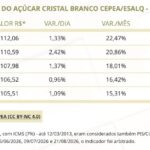
The early-season tilt toward ethanol could provide some support to global sugar prices, which spent much of the previous year under pressure. According to specialists, international sugar prices began declining in June 2025 due to recovering global production, while the Brazilian real’s depreciation against the dollar further affected returns.
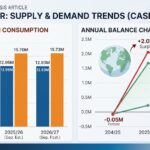
Looking ahead, the Center-South region is expected to produce 39 MMT of sugar in 2026/27, an approximately 3% reduction compared with the 40.6 MMT estimated for 2025/26— a forecast that aligns with the ethanol-heavy mix observed in the opening fortnight.
For traders, refiners, and energy buyers alike, the upcoming bi-weekly UNICA reports will be critical in confirming whether this ethanol-leaning trend persists deeper into the harvest, or whether sugar margins recover sufficiently to draw cane back toward the sweetener side of the mill.
Disclaimer: This report is based on the latest bulletin from UNICA (União da Indústria de Cana-de-Açúcar) and current market intelligence as of May 2026. While ynsugar.com strives for absolute accuracy, agricultural production and market margins are subject to rapid shifts. The information contained herein is for research and informational purposes only and does not constitute financial, trading, or investment advice. Users are responsible for verifying data before making any commercial decisions.