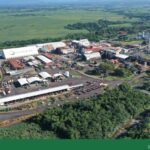
Vietnam sugar industry carbon reduction has become a critical focus as producers undergo a green transformation. With international markets tightening emissions standards, decarbonization is now a business imperative.
May 5, 2026 Vietnam’s sugar producers are undergoing a critical green transformation as international markets tighten emissions standards and global trade rules evolve. For an industry long shaped by smallholder farming and fragmented supply chains, decarbonization has shifted from a long-term aspiration to an immediate business imperative.
1. The New Rules of Global Trade
The push to reduce greenhouse gas emissions has gained unprecedented momentum following the COP26 commitments, aiming to limit global warming to $1.5^\circ C$ above pre-industrial levels. Alongside these commitments, climate finance and international cooperation are opening new support channels for developing economies like Vietnam.
According to Dr. Cao Anh Duong, Director of the Sugarcane Research Institute and Vice President of the Vietnam Sugarcane and Sugar Association (VSSA), carbon reduction is no longer optional—it is becoming mandatory. Developed nations are extending these standards across entire global supply chains.
-
Market Pressure: Major markets like the EU and the US are favoring low-emission producers. The EU’s Carbon Border Adjustment Mechanism (CBAM) remains the most significant looming pressure, threatening tariffs on high-carbon imports.
-
Domestic Regulation: Vietnam’s Decree 06/2022/ND-CP and Decision 236/QD-TTg now require major emitters to conduct emissions inventories. Currently, 150 companies are slated for a pilot program before these requirements expand nationwide.
2. Vietnam’s Sugar Production: A Five-Year Growth Streak
Despite the regulatory pressure, Vietnam’s sugar industry is currently in a period of robust recovery and growth. Driven by improved varieties (such as KK3) and better farm-gate prices, the industry has seen a steady increase in both output and productivity.
Table: Vietnam Sugar Production Data (Recent Crushing Seasons)
| Crushing Season | Harvested Area (ha) | Crushed Cane (Million Tons) | Sugar Production (Tons) |
| 2021-2022 | ~130,000 | 7.50 | 752,200 |
| 2022-2023 | 163,019 | 11.20 | 1,108,000 |
| 2023-2024 | 175,000 | 12.67 | 1,243,000 |
| 2024-2025 | 189,360 | 12.43 | 1,266,000 |
| 2025-2026 (Proj) | 201,287 | 13.34 | 1,370,000 |
Source: Consolidated data from VSSA (Vietnam Sugarcane and Sugar Association)
For the 2024-2025 season, Vietnam maintained a leading position in ASEAN sugar productivity, reaching approximately 6.69 tons of sugar per hectare, outperforming regional competitors like Thailand and Indonesia.
3. Structural Challenges and the Circular Economy
Despite rising yields, internal hurdles remain. Production is still largely small-scale, and the relationship between mills and farmers lacks the codified profit-sharing frameworks found in Thailand or Australia.
Emissions Hotspots:
-
Cultivation: ~76% of total emissions (largely due to leaf burning and traditional fertilizer use).
-
Transportation: ~12%.
-
Processing: The remainder.
The industry’s average emissions intensity stands at roughly 0.55 kg $CO_2$ per kg of sugar. With an estimated 696,322 tons of $CO_2$ produced in the 2024-2025 crop year, the room for reduction—and credit generation—is substantial.
The Circular Potential:
Sugarcane is an “energy crop.” Byproducts like bagasse (27-30%), molasses (4-5%), and filter mud (3-4%) offer massive opportunities for biomass power, biofuels, and organic fertilizers. Leveraging these can transform the sector from a high-emission industry into a high-value, circular bio-economy.
4. A Transformation That Cannot Wait
“Green transformation is no longer a choice—it is an unavoidable path,” Dr. Duong stated. The question for Vietnamese mills is no longer if they should transition, but how quickly they can adapt to the new rules of global capital. Those who move first will gain access to “green” financing and carbon credit revenue; those who wait risk being forced out of the market.
Detailed Data Visualization: For a comprehensive look at the historical production trends from 2018 through 2026, explore our interactive dashboard: Vietnam Annual Sugar Production Analysis.
Disclaimer: This article is compiled and translated from reports by the Ministry of Agriculture and Rural Development (MARD) of Vietnam and data provided by the Vietnam Sugarcane and Sugar Association (VSSA). The information provided is for industrial news and analytical purposes only and does not constitute financial or investment advice. While every effort has been made to ensure accuracy, ynsugar.com is not responsible for any errors or omissions.