As the heart of the Guangxi sugar industry—which accounts for the majority of China’s output—Laibin City has concluded its 2025/2026 season with record-breaking figures…
Analysis by the YNSugar Research Team–Breaking the Traditional Commodity Cycle,Guangxi Laibin is actively pivoting from “tonnage competition” to “value-chain competition.”
Overview
Guangxi remains China’s largest sugar-producing region, and within it, Laibin City has emerged as one of the most significant production hubs powering the nation’s sugar supply. The recently concluded 2025/2026 crushing season marks not only a record-breaking production cycle for the city but also a pivotal moment in the structural evolution of its sugar and food processing industry — a shift from raw material output toward integrated, high-value manufacturing.
Record Production Numbers for the 2025/2026 Crushing Season
According to data released in April 2026 by the Laibin Municipal Sugarcane Industry Office, the 2025/2026 crushing season closed with measurable gains across every major indicator:
- Sugarcane processed: 10.8357 million tons entered mills, representing a 28% year-on-year increase.
- Refined sugar produced: 1.4078 million tons, up 20.1% year-on-year.
- Total output value of sugar manufacturing and comprehensive utilization: projected to exceed 16 billion yuan, a 6.67% year-on-year rise.
The crushing campaign spanned 151 days and covered the entirety of Laibin’s cane-growing zones. Beyond the headline figures, this season serves as a working illustration of how the city is stabilizing yields, improving product quality, and — perhaps most importantly — transitioning its sugar economy from a model of pure raw material supply toward one defined by value chain integration.
Table: Laibin City 2025/2026 Sugar Season Performance
| Indicator | Volume (2025/26) | Year-on-Year Growth |
| Sugarcane Processed | 10.8357 Million Tons | +28% |
| Refined Sugar Produced | 1.4078 Million Tons | +20.1% |
| Total Industrial Output Value | >16 Billion Yuan | +6.67% |
A Core Pillar of Laibin’s “9+3” Modern Industrial System
Within Laibin’s “9+3” modern industrial framework(a strategic initiative prioritizing nine core pillar industries and three emerging sectors), sugar manufacturing and food processing stands as one of the nine core pillar industries. The sector is deeply rooted in the fertile lands of central Guangxi and has been built on decades of accumulated expertise, infrastructure, and grower networks.
The transformation underway can be summarized in three movements:
- From contiguous cane fields to intelligent factory floors — mechanization and digital monitoring now extend from planting through milling.
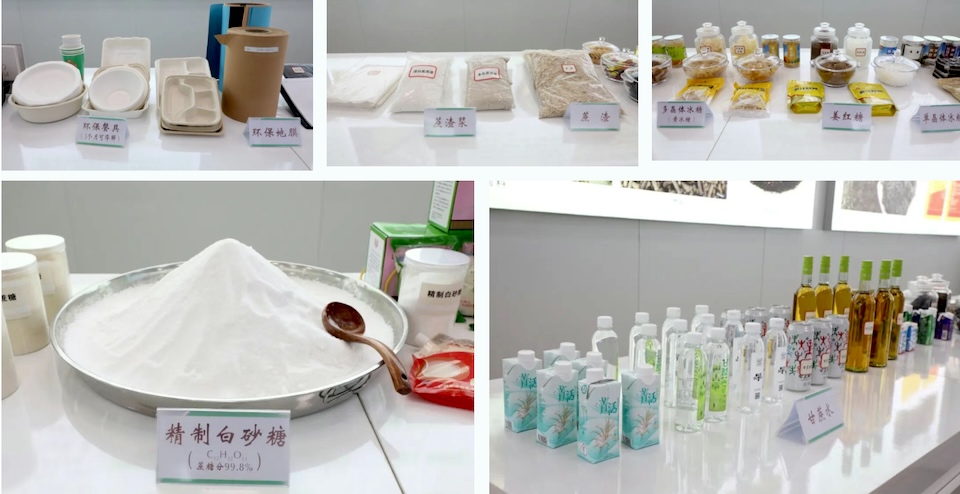
- From single-product sugar output to diversified processing — molasses, bagasse, and other by-products feed into circular utilization streams.
- From resource advantage to genuine industrial advantage — Laibin is leveraging sugar as a medium and food as an enabler to unlock upgrade, integration, and growth across the entire chain.
How the Industry Is Structured
Laibin’s sugar and food processing industry is best understood as a complete vertical, not a single manufacturing step. Rooted in high-quality sugarcane cultivation, the value chain extends through:
- Modern mechanized sugar production using updated milling and refining technology.
- Deep processing of sugar-derived products, including specialty and refined sugars.
- Circular utilization of by-products such as molasses and bagasse, which are channeled into bioenergy, paper, feed, and chemical inputs.
- Specialty food R&D and manufacturing, expanding the city’s product portfolio beyond commodity sugar.
- Condiment and seasoning production, leveraging sugar as a key ingredient input.
- Health-oriented food development, addressing rising consumer demand for functional and reduced-sugar products.
- Agriculture-food-tourism integration, where cane landscapes and processing heritage support cultural and experiential tourism.
This forms what local planners describe as a “source-end planting + mid-stream smart manufacturing + downstream value addition” complete industrial map.
Breaking with the Traditional Sugar Model
The old paradigm of Chinese sugar production — characterized by raw sugar output, short supply chains, and low value-add — no longer defines Laibin’s approach. The city’s current industrial direction is anchored in five guiding principles: high-end positioning, intelligent operations, green production, high-value utilization, and cross-sector integration.
In practical terms, this means the journey from “one mu of cane field” to “diverse finished products” is now matched by a parallel transition from raw material export to brand export. Producers are no longer competing on tonnage alone; they are competing on product sophistication, traceability, sustainability credentials, and brand identity.
The Broader Economic and Social Role
Sugar is more than a commodity for Laibin — it is the central motif of the “Sweet Laibin” city identity. The industry threads through all three sectors of the economy: agriculture (cane growers and cooperatives), industry (mills, refineries, and food processors), and services (logistics, branding, and tourism).
This breadth gives the sector an outsized role in:
- Livelihood security for tens of thousands of cane farmers across the city’s growing regions.
- Economic stability, functioning as a ballast against volatility in other sectors.
- Industrial momentum, anchoring downstream investment in food manufacturing and related supply chains.
- City branding, shaping how Laibin presents itself regionally and nationally as a center of agro-industrial excellence.
What the 2025/2026 Season Signals for the Future
The combination of a 28% increase in cane intake and a 20.1% increase in refined sugar output, paired with more modest growth in total industrial value (6.67%), is itself instructive. It suggests that while volume is expanding rapidly, the value uplift per ton is still being built out through deeper processing investments. In other words, Laibin’s industrial upgrade is a work in progress — the raw inputs are scaling, and the value-capture infrastructure is steadily catching up.
For observers of China’s agricultural modernization, Laibin offers a clear case study: a regional commodity hub deliberately repositioning itself as a diversified, branded, and integrated food manufacturing cluster. The 2025/2026 season is not just a record — it is a checkpoint on a longer transformation.
Data source: Laibin Municipal Sugarcane Industry Office, April 2026. Production figures reflect the official close of the 2025/2026 crushing season.
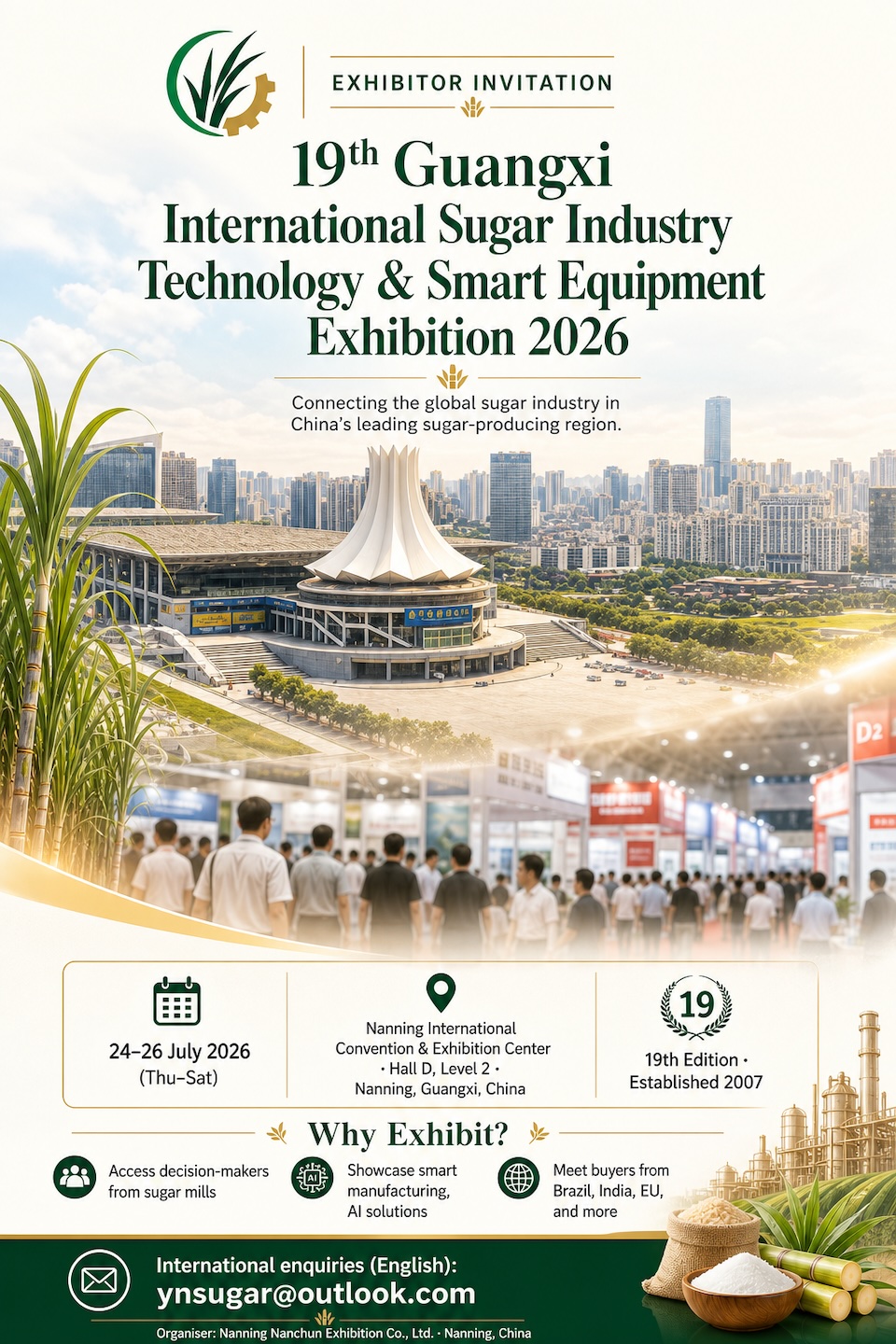
Want to see these industrial upgrades in person? Join us at the 19th Guangxi International Sugar Industry Expo this July.
Meet the YnSugar Team at Guangxi Sugar Expo 2026
As part of our commitment to global sugar industry analysis, the YnSugar team will be present at the 19th Guangxi International Sugar Industry Technology & Smart Equipment Exhibition. This is the premier event to understand China’s technological leap in sugarcane processing.
Plan Your Visit:
-
When: July 24-26, 2026
-
Where: Hall D, Level 2, Nanning International Convention & Exhibition Center
-
Inquiries: [email protected]