Sugar Basis Trading China has entered a new chapter as the Nanning and Zhengzhou Pilot Free Trade Zones join forces…
How Two Free Trade Zones Are Reshaping Commodity Basis Trading
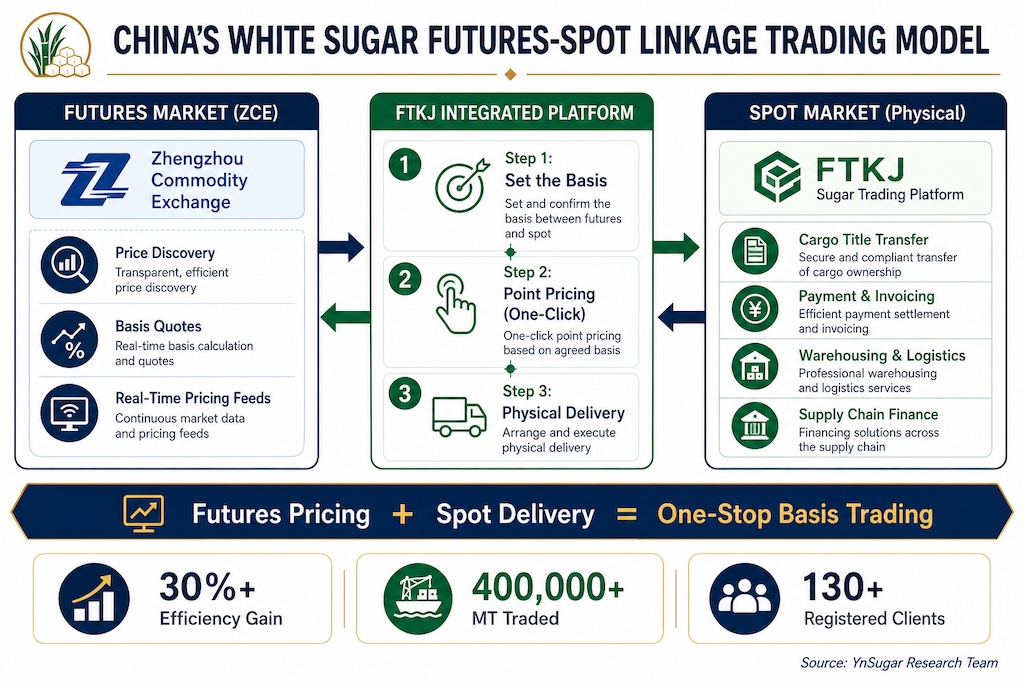
Basis trading in China’s sugar industry has long been bogged down by offline inefficiencies—fragmented pricing, slow settlement, and costly logistics. A recent cross-regional collaboration is changing that. The Nanning Area of the Guangxi Pilot Free Trade Zone and the Zhengzhou Area of the Henan Pilot Free Trade Zone have joined forces to launch a new futures-spot integration model for sugar trading, built around a dedicated FTKJ zone on the Zhengzhou Commodity Exchange (ZCE) comprehensive business platform.
The initiative creates a seamless pipeline where futures set the price and spot markets handle delivery, all through a single integrated workflow. Beyond streamlining sugar commerce, the project contributes to Beijing’s broader agenda of building a unified national market for bulk commodities.
How Sugar Basis Trading China Works
1. A Digital Marketplace for Physical Sugar
The Nanning FTZ worked with a sugar industry platform company to launch an online spot trading venue for white sugar. The platform aggregates premium-branded sugar supply from across China and offers multiple online transaction formats tailored to different buyer needs. Integrated logistics and financial services round out the ecosystem, cutting transaction costs and accelerating the pace at which sugar moves from mill to end user.
2. An Exchange-Backed OTC Platform for Basis Trading
The Zhengzhou Commodity Exchange developed its own comprehensive OTC platform combining trading, clearing, and risk management in one system. Launched in March 2018, the platform supports 15 futures products and enables online basis trading with features such as real-time basis quotations, one-click pricing, and linked pricing mechanisms. It represents the exchange’s effort to bring futures-market capabilities directly into service of the real economy while fostering coordination between on-exchange and off-exchange activity.
3. End-to-End Integration Through the FTKJ Zone
The two free trade zones jointly launched the FTKJ zone on ZCE’s OTC platform, delivering a genuine one-stop experience for sugar basis trading. Counterparties post or accept offers on the platform to fix price and quantity, and the transaction data flows directly into the FTKJ spot trading platform. From there, users can complete title transfer, payment settlement, and invoicing, with optional warehousing, logistics, and supply chain finance services bolted on as needed.
Results on the Ground
Industry clustering. The joint model brings together complementary strengths from both regions, drawing upstream and downstream players into a unified ecosystem and reinforcing the stability of China’s sugar supply chain.
Faster, cheaper sugar trade. Since the FTKJ zone went live, the “futures pricing, spot delivery” workflow has improved efficiency by more than 30%, and has saved sugar enterprises over one million yuan in trading costs.
Progress toward a unified national market. By linking futures and spot markets, the model uses futures-grade standardization to discipline spot-market practices. This helps dismantle regional silos, lock in costs, and clear logistics bottlenecks. To date, the FTKJ zone has registered over 130 clients and cleared more than 400,000 tonnes of sugar, covering most of Guangxi’s major sugar producers along with leading mid- and large-scale sugar traders.
Q&A: Expert Insights: What Is Basis Trading in the Sugar Industry?
Answered by the YnSugar Analyst Team
Basis trading is a pricing model in which the final transaction price is built on top of a futures reference price, with buyer and seller negotiating the basis—the spread between spot and futures prices. Its core logic is to convert hard-to-predict absolute price risk into the more manageable risk of basis fluctuation. The approach is widely used across bulk commodities; in iron ore, for example, roughly 90% of trade today is priced on a basis.
In the sugar futures-spot model, basis trading on the ZCE platform allows companies to flexibly choose their pricing timing—locking in costs or profits when market conditions are favorable.
The workflow has three steps: setting the basis, pricing, and delivery. Participants typically include producers (locking in margins), traders (capturing arbitrage), and end users (stabilizing input costs).
The main advantages are reduced price exposure and more efficient price discovery. The main caveat: traders need to watch for abnormal basis movements, which can erode the very protections the model is designed to provide.
The YnSugar Analysis Team provides high-purity intelligence on the global sugar market, focusing on trade policy, supply chain innovation, and data-driven market forecasts.
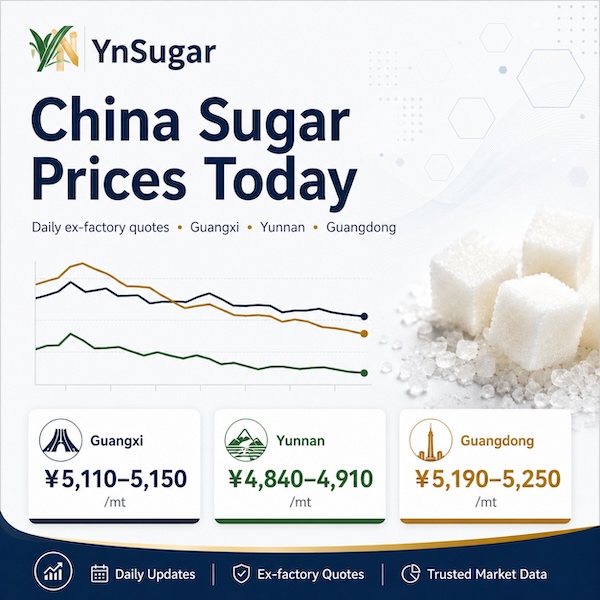
Stay Ahead of the Market Monitoring daily price fluctuations is critical for effective basis trading and risk management. Access our comprehensive Daily China Sugar Prices & Quotes for the latest spot market data and expert analysis.