China sugarcane import strategy is undergoing a permanent structural shift. For most of the past two decades, the cane that crossed China’s southwestern border each winter was treated as a useful top-up…
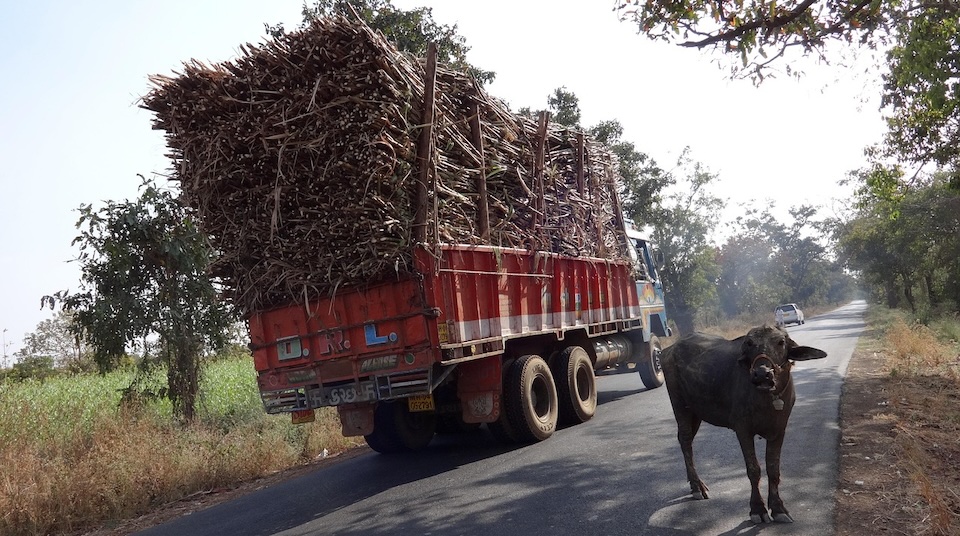
For most of the past two decades, the cane that crossed China’s southwestern border each winter was treated as a useful top-up—a way to keep mills running when domestic supply fell short. The 2025/26 crushing season suggests that framing no longer fits. Yunnan, China’s second-largest cane-sugar region, is now importing raw sugarcane at industrial scale through a handful of border crossings, and the numbers point to something closer to a deliberate, structural sourcing strategy than an occasional fix.
A record season, and a record reliance on imported cane
Yunnan’s 2025/26 season has effectively wrapped up. By early June the province had logged its highest-ever sugar output, and the broader trajectory is striking: as of late May, 44 sugar mills in Yunnan had concluded crushing for the 2025/26 season, having processed a cumulative 22.30 million tonnes of sugarcane—an increase of roughly 23% year-on-year.
What makes this season notable isn’t just the volume of domestic cane crushed, but how much of the feedstock came from across the border. According to the figures circulating in the trade, Yunnan’s ports brought in about 3.94 million tonnes of foreign sugarcane between October 2025 and the end of April 2026—equivalent to roughly 18% of the province’s total crush. Nationally, China imported around 4 million tonnes of foreign cane over the same window, and Yunnan accounted for an overwhelming 98.36% of it.
That dependence is reflected in the official trade data as well. From October 2025 through February 2026, Yunnan imported 2.54 million tonnes of sugarcane—up 8.6% year-on-year—sourced primarily from Myanmar (63%) and Laos (35%).For context on direction of travel, the USDA’s outlook expects national cane-sugar growth to be driven in part by expanded sugarcane acreage in Guangxi and Yunnan’s increased imports of raw sugarcane from neighboring countries such as Myanmar and Laos.
Menglian: a single crossing moving 4,700 tonnes a day
The standout performer this season was the Menglian port in Pu’er, on the China–Myanmar border. Across the 2025/26 season it handled roughly 934,000 tonnes of imported cane—up about 62% from the previous season’s 576,200 tonnes—with trade value climbing a comparable 62.6% to around 457 million yuan (roughly US$63 million). Spread across an active season of about six months, that works out to the headline figure of some 4,700 tonnes of cane crossing this one border point every day. By local accounts the corridor has now strung together three consecutive years of growth above 19%.
The mechanics behind that throughput are visible in earlier customs reporting from the same crossing. In the first quarter of 2025 alone, the Mangxin channel at Menglian cleared 34,000 inbound and outbound vehicle trips and 600,000 tonnes of goods, dominated by inbound sugarcane—32,800 tonnes worth 154 million yuan.Officials credited a dedicated fast lane for cane traffic: a precision service model separating people from vehicles and cargo and extending clearance hours cut waiting times sharply, lifting daily vehicle throughput by 36%.That logistics edge matters more than it might appear, because cane is perishable on a scale of hours, not days—a point I’ll return to below.
The supply base feeding Menglian sits on the Myanmar side. As one local sugar-company manager described the arrangement, imports of Myanmar cane have risen year after year, reflecting growing enthusiasm among cross-border farmers, steadily expanding planting area, and trade-facilitation measures at the crossings that make raw-material supply more secure.
Qingshuihe: cane to sugar to industrial value-added
A few hundred kilometers to the west, the Mengding Qingshuihe port in Lincang turned in its own strong season. It brought in roughly 500,000 tonnes of cane worth about 204 million yuan, expected to yield around 62,000 tonnes of sugar and generate on the order of 320 million yuan in industrial value-added—a useful illustration of how a raw-material flow ripples downstream into processing output.
Lincang’s results rest on a maturing cross-border planting model. A cane-base operator described some 115,000 mu of plantations established in Myanmar using Chinese seed varieties and technical standards, with cane moving directly through Qingshuihe into the milling zone—cutting transport costs by around 10% and creating a tight “field-to-factory” link.The same account framed the wider impact: the cane supplements domestic raw-material supply and supports agricultural development in northern Myanmar, with China–Myanmar cross-border cooperation creating more than 700 seasonal jobs and forming a chain of “overseas planting, domestic processing, and sales at home and abroad.”
The freshness factor that makes border logistics so valuable was put plainly by a Lincang miller: once cane is cut its sugar converts quickly, and every hour saved can raise sugar-extraction rates by 0.1–0.3%, so smart-port clearance helps preserve raw-material freshness.That figure helps explain why so much effort goes into shaving hours off clearance—small per-tonne gains compound across hundreds of thousands of tonnes.
Lincang’s overall scale underscores why it anchors this trade. The region is, by provincial measures, home to the Mengding Qingshuihe crossing—a national first-class port nicknamed the “golden port” as Kunming’s shortest land route to Myanmar’s Kyaukpyu and Yangon—and ranks first in Yunnan for both sugarcane area and output.
Pillar Resource
For deep-dive statistical tracking and historic customs data, refer to our comprehensive:
China Sugar Import Report.
From “supplementary imports” to “strategic positioning”
Put the pieces together and a pattern emerges. The dominant ports are growing in both volume and value; the cross-border substitution-planting model—Chinese seed and agronomy on foreign land, feeding Chinese mills—is no longer experimental; and smart-port infrastructure is being built specifically around cane’s tight time window. Analysts at ynsugar read this as Yunnan consolidating its leadership in China’s foreign-cane imports, with the province’s raw-material security shifting from opportunistic “supplementary imports” toward a more deliberate “strategic layout.”
There are good reasons to expect that direction to hold, but also reasons for caution. On the supportive side, the policy roots run deep: cross-border cane substitution emerged in the late 1990s from a convergence of drug-control, poverty-alleviation, and supply-security objectives, and nearly three decades on the program has produced measurable results, with several thousand Myanmar farming households delivering large volumes of crushed cane and seeing meaningful per-capita income gains.Macro forecasts, too, lean toward expansion rather than retreat.
The risks, however, are real and largely sit on the foreign side of the border. The same analysis that documents the program’s gains also warns that it now stands at a critical inflection point, where early advantages must contend with intensifying constraints, including political volatility.Northern Myanmar in particular is exposed to instability that can disrupt growing zones and shipments, and political instability disrupts normal operations in some areas, while a fragile local economy, underdeveloped infrastructure, and shortages of agricultural-extension and management staff constrain the pace of expansion.
For now, the 2025/26 season delivers a clear message: a meaningful and rising share of Yunnan’s sugar no longer begins in a Chinese field at all. It begins on a hillside in Myanmar or Laos and crosses the border—at one port, on a busy day, at roughly 4,700 tonnes—before it ever reaches a Chinese mill. Whether that becomes a durable pillar of China’s sugar supply or remains hostage to conditions across the border is the question the next few seasons will answer.
A note on figures: Several headline numbers in this article—including the season totals for the Menglian and Qingshuihe crossings and the 115,000-mu (≈7,700-hectare) overseas planting base—come from regional and industry reporting and should be read as the best available season-end estimates rather than fully reconciled customs final data. Where independent corroboration exists (provincial crush volumes, October–February national import figures, and prior-season port throughput), it has been cited above.
Disclaimer: Several headline figures in this article—including season totals for specific border crossings and overseas planting acreage—are compiled from regional industry estimates and preliminary trading data. They should be read as best available season-end approximations rather than fully reconciled customs final data. ynsugar.com provides this analysis for informational purposes only and does not constitute financial, investment, or trading advice.