April 29, 2026
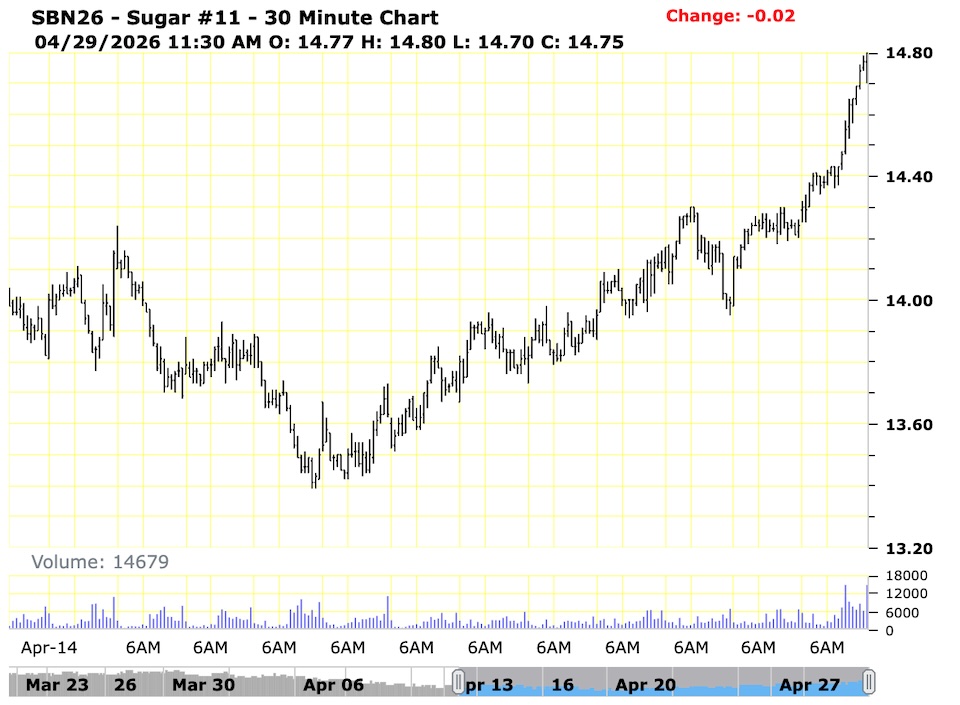
Sugar production in Brazil’s Center-South region — the world’s most important sugarcane growing area — is expected to have dropped 26.4% year-on-year in the first half of April, falling to approximately 541,000 metric tons, according to a survey of 11 analysts published Tuesday by S&P Global Commodity Insights. The news sent raw sugar futures to a three-week high as traders absorbed the implications for global supply.
Output Falls Even as Crushing Rises
The production decline is not a sign of reduced field activity. The same survey projects that cane crushing in the period actually increased 5.8% year-on-year, reaching 17.64 million metric tons. The divergence points to two key factors: lower sucrose content in the harvested cane, and a deliberate shift by mills toward ethanol production at the expense of sugar output.
Ethanol Boom Pulls Cane Away from Sugar
Ethanol production tells the opposite story — output is forecast to surge 23.5% over the same period, hitting 1.13 billion liters. The spike reflects a favorable policy environment: Brazil is set to raise the mandatory anhydrous ethanol blending ratio in gasoline from 30% to 32% in the first half of 2026, a move that analysts estimate will boost annual ethanol demand by roughly 920 million liters per percentage-point increase. With ethanol economics outpacing sugar margins, mills have strong incentives to direct more cane toward biofuel.
Drought and Rising Costs Weigh on the Season
Supply-side headwinds extend beyond mill-mix decisions. Brazil’s national supply agency Conab has already trimmed its 2025/26 season cane output forecast for the Center-South, citing persistent water shortages across key producing states. Cost pressures are mounting as well — diesel prices in major sugarcane regions have climbed roughly 23% amid elevated energy markets, pushing up harvesting, transport, and milling expenses.
What It Means for Global Sugar Markets
Brazil’s Center-South accounts for a dominant share of global sugar exports, making its production trends a closely watched barometer for international prices. With output constrained by both agronomic and commercial factors — and with the ethanol blending mandate set to tighten further — analysts see near-term global sugar supply remaining tight, providing continued price support heading into the second quarter of 2026.
For more details on the 2026 ethanol mandate, check our analysis of the [Brazil Ethanol Blend 32% policy].
Sources: S&P Global Commodity Insights survey of 11 analysts (April 28, 2026); Conab; Brazilian government energy policy announcements
Disclaimer: This article is for informational and industry analysis purposes only and does not constitute financial or investment advice. The data cited (including the 26.4% production drop and 1.13 billion-liter ethanol forecast) are based on the S&P Global Commodity Insights survey and official government reports as of April 29, 2026. Agricultural commodity and energy markets are highly volatile; ynsugar.com is not responsible for any market decisions or financial outcomes resulting from this content.