Guangxi, the undisputed “Sugar Capital” of China, is no longer just about sweetness. In the 2024/25 crushing season, the province produced 6.46 million tonnes of sugar, maintaining its 20-year streak of contributing roughly 60% of China’s total output. However, the real story lies in what happens after the juice is squeezed.
The Bagasse Miracle: From Waste to Global Export Hub
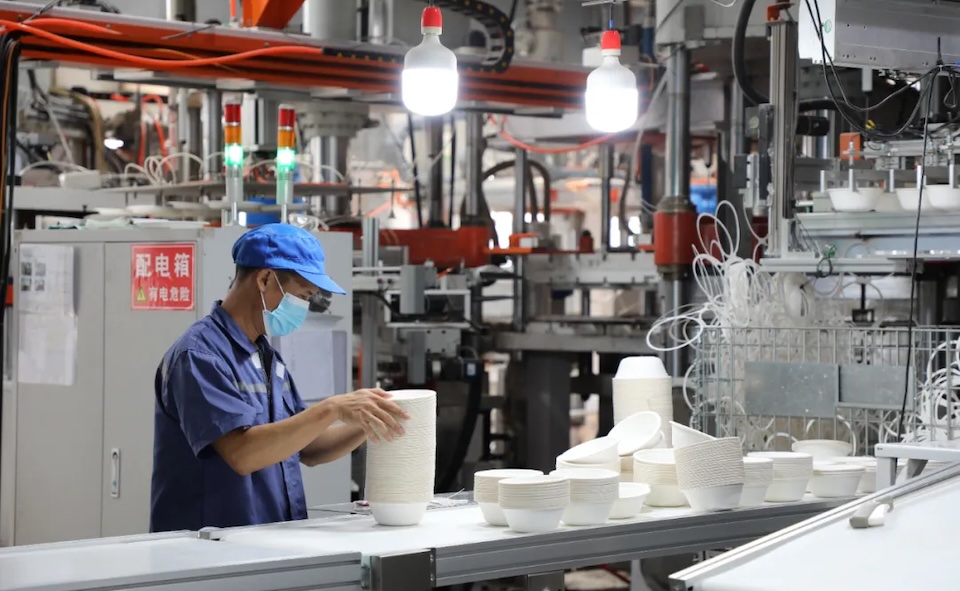
For decades, sugarcane bagasse was a disposal headache. Today, Guangxi has transformed it into a cornerstone of the global biodegradable tableware market.
-
100% Utilization: Every scrap of bagasse is now repurposed for paper making or eco-friendly molding.
-
Massive Scale: In 2023, Guangxi’s eco-tableware output reached 150,000 tonnes.
-
The 3-Month Cycle: Unlike plastic, these bagasse-based plates and bowls decompose into water and CO2 within 90 days in natural environments, making them a top-tier export to ESG-conscious markets in Europe and North America.
In cities like Chongzuo (the “Sugar Capital of China”) and Laibin, the production lines are fully automated. The Laibin base alone boasts a bagasse tableware capacity valued at 570 million RMB, proving that sustainability is a highly profitable venture.
Beyond Food: The Surge in High-Value Innovation
Guangxi’s sugar industry is moving up the value chain. It’s no longer just white sugar; it’s about precision chemicals and pharmaceuticals.
-
Medicinal Sugar Breakthrough: A landmark project by COFCO Sugar is currently under construction to produce medicinal-grade sugar, filling a critical gap in China’s domestic pharmaceutical supply chain.
-
Diverse Product Portfolio: The industry now boasts over 20 deep-processed products (including liquid sugar and functional sugars) and over 30 comprehensive utilization products (such as yeast and bio-fertilizers).
-
Smart Manufacturing: Nearly half of Guangxi’s sugar mills are now equipped with automated palletizing, unloading, and centrifugal systems, drastically increasing operational efficiency.
“Squeezing the Cane Dry”: The Future of Circularity
Engineers in Guangxi are pursuing a philosophy known as “squeezing the cane dry.” The future roadmap includes:
-
Sugarcane Plant Water & Beverages: Extracting water directly from the plant during processing.
-
Rum Production: Leveraging high-quality molasses to enter the global spirits market.
-
Refined Speciality Sugars: Shifting from bulk commodities to refined, functional, and pharmaceutical-grade products.
YnSugar Analyst’s View
The evolution of the Guangxi sugar industry represents a global benchmark for agricultural circular economies. By achieving 100% utilization of bagasse, molasses, and filter mud, Guangxi has decoupled industrial growth from environmental waste. For global investors and traders, Guangxi is no longer just a price factor in the ICE No. 11 market; it is a vital supplier of the next generation of bio-based materials.
Guangxi’s sugar industry offers a compelling case study in circular economy thinking: a single crop — sugarcane — is being systematically transformed into an ever-expanding portfolio of products that span food, energy, agriculture, and sustainable packaging. As the world searches for practical alternatives to single-use plastics and higher-value uses for agricultural by-products, Guangxi’s experience demonstrates that the sugar industry can be far more than just sugar. It can be a model for green, circular, and high-value industrial development.