HANOI — The Vietnam sugar industry has entered uncharted territory. For the first time in the sector’s history, domestically produced cane sugar — backed by full documentation and legitimate origin — is being sold below the price of smuggled contraband, and still cannot find buyers. The industry has sunk into its deepest slump in years.
Sugar Prices Fall to a Three-Year Low as Smuggling Surges
According to the latest data from the Vietnam Sugarcane and Sugar Association (VSSA), domestic sugar prices hit a three-year low in May 2026. Refined white sugar (RE) was quoted at VND 17,000–17,600 per kilogram, while standard refined sugar (RS) fetched just VND 15,800–16,600 per kilogram — down roughly VND 3,000/kg from recent highs.
To put that in a regional context, Vietnamese sugar prices are now approximately:
-
15% below prices in China
-
65% below prices in Indonesia
-
67% below prices in the Philippines
This collapse is particularly striking given that global sugar prices were trending upward in May 2026. Vietnam has effectively become the lowest-priced sugar market in Southeast Asia. VSSA Chairman Nguyen Van Loc acknowledged that even after producers aggressively cut prices and improved product quality, sales simply have not recovered.
The root cause is a massive influx of both smuggled sugar and legally imported sugar from ASEAN countries, flooding a domestic market already struggling with structural oversupply.
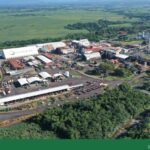
📷 Market Context
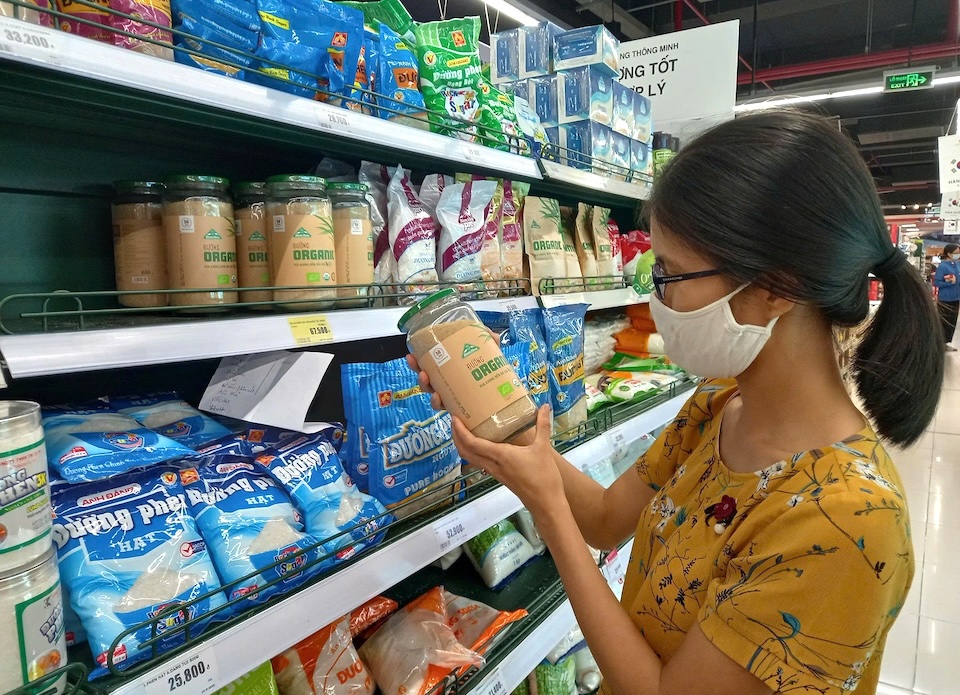
(Caption: Domestically produced sugar stocks remain high in Vietnamese retail channels as illegal contraband undercuts legitimate millers.)
Smuggled Thai Sugar Sold Openly at Local Markets
VSSA’s May 2026 report documented rampant trade fraud across the country. Smuggled Thai white sugar — priced around VND 16,300 per kilogram — was openly displayed and sold at wet markets in numerous provinces and cities. Unverified-origin sugar products were also being hawked publicly on social media, while repackaged and loose bulk sugar continued to spread unchecked through informal channels.
The economic incentive is clear: smuggled sugar bypasses Vietnam’s trade remedy duties on Thai sugar, which include a 42.99% anti-dumping tariff and a 4.65% countervailing duty. Transactions are typically conducted in cash with no invoices, enabling large-scale tax evasion. Vietnam introduced trade remedy measures against certain Thai sugar products in 2021, and extended anti-circumvention duties in 2022 to cover sugar transshipped through Laos, Cambodia, Indonesia, Malaysia, and Myanmar — but neither round of measures has stemmed the flow.
Inside the Smuggling Routes: Boats on the Se Pon River
In April, VSSA joined a joint media investigation at the Lao Bao border crossing in Quang Tri Province, uncovering a well-established smuggling corridor. Just three kilometers from the official border checkpoint, in the Lao town of Dansavanh, sugar stockpiles are estimated to sit at a steady 3,000 to 5,000 metric tons at any given time.
Smugglers ferry the sugar across the Se Pon River using hundreds of small boats under the cover of darkness, each vessel carrying 3 to 5 tons per trip. Operations are deliberately timed to coincide with border guard shift changes, allowing shipments to slip through undetected.
A Historic First: Compliant Sugar Undercut by Contraband
VSSA called May 2026 a watershed moment — the first time in the history of the Vietnam sugar industry that fully documented, legally produced domestic sugar has had to drop its price below that of smuggled goods, and still failed to sell.
The situation lays bare a systemic disadvantage for compliant producers: when smuggled sugar operates entirely outside the tax and regulatory framework, law-abiding manufacturers simply cannot compete on price without absorbing unsustainable losses.
By the end of April 2026, Vietnam’s 2025/26 crushing season had processed approximately 11.1 million metric tons of sugarcane, yielding around 1.06 million metric tons of sugar. Most mills completed the season by mid-May. Yet even during the peak summer beverage season — normally the industry’s strongest demand period — downstream food and beverage companies are increasingly switching to cheaper imported high-fructose corn syrup (HFCS), further eroding what little demand remains for domestic cane sugar.
June Outlook Bleak; Industry Calls for Urgent Action
VSSA projects that supply will remain abundant through June, with no near-term recovery in sight for either consumption or prices. Some mills are already weighing cuts to sugarcane procurement prices paid to farmers — a move that would directly threaten the livelihoods of tens of thousands of farming households and could trigger a sharp contraction in cane cultivation acreage over the next several seasons.
The industry is urging the government to act on multiple fronts:
-
Enforce Borders: Crack down harder on border smuggling and ramp up enforcement operations along key river corridors.
-
Audit Tax Evasion: Prosecute invoice fraud and tax evasion more aggressively in informal sugar trading markets.
-
Level the Playing Field: Expand special consumption taxes to cover all added-sugar products, including HFCS, to balance market competitiveness.
Industry experts are also calling on sugar companies to accelerate diversification — expanding into bagasse-fired power generation, molasses-to-ethanol production, and organic fertilizer manufacturing — to reduce the sector’s vulnerability to sugar price volatility.
VSSA issued a stark warning: “If authorities do not take stronger action against sugar smuggling and improve oversight of uninvoiced transactions and tax evasion, domestically produced sugarcane sugar will face increasingly serious difficulties.”
Disclaimer: This article is compiled and translated from official market updates provided by the Vietnam Sugarcane and Sugar Association (VSSA) and Vietnamese agricultural media outlets, including nongnghiepmoitruong.vn. ynsugar provides this data for global agricultural market tracking and informational purposes only. It does not constitute commercial trading advice.