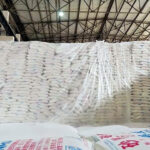
Our comprehensive Global Sugar Market Outlook for the 2026/27 marketing year highlights a tightening supply balance. According to the newly released report by the USDA Foreign Agricultural Service, world sugar output is projected to edge down by 1.2 million metric tons…
Introduction
The global sugar market stands at a critical juncture as the world’s major producing nations transition into the 2026/27 marketing year. Following a prolonged period of pricing pressure—where the ICE No. 11 front-month raw sugar contract dipped below 14.0 USc/lb early in 2026—market participants are closely watching whether shifting supply dynamics will offer fundamental support.
According to the U.S. Department of Agriculture’s (USDA) Foreign Agricultural Service (FAS) May 2026 report, global sugar production is projected to edge down by 1.2 million metric tons to 184.85 million tons. While a massive production rebound in India is underway, output contractions across Brazil, the European Union, Thailand, and the United States are shaping a market balanced on a knife’s edge.
I. Country and Regional Deep-Dives
1. Brazil: The Ethanol-to-Sugar Parity Tug-of-War
Brazil remains the undisputed anchor of global supply, but the 2026/27 season introduces a sharp operational pivot. Although cumulative sugarcane volume is projected to rise due to favorable rainfall, crystal sugar output and exports are forecast to decline.
-
The Ethanol Catalyst: Rising domestic gasoline prices in Brazil have significantly altered the profitability calculus. Mills now possess enhanced flexibility to shift their crushing mix, heavily incentivizing a tilt toward ethanol over sugar.
-
Trade Policy Shifts: Brazil continues to consistently fulfill its 14% allocation under the U.S. Tariff-Rate Quota (TRQ) program. Furthermore, under the EU-Mercosur trade agreement provisionally applied since May 1, 2026, a duty-free quota of 180,000 tons of raw sugar for refining has been activated. Aligned with Brazilian federal law, this entire allocation is strictly earmarked for economically sensitive producers in the country’s Northeast region.
2. India: Monsoon-Fueled Recovery
After several seasons marred by El Niño-induced droughts, India’s sugar sector is poised for a powerful 26% year-on-year surge, reaching 35.3 million tons. Favorable consecutive monsoons have successfully replenished vital groundwater reserves across key agricultural hubs.
-
Structural Supply Reversal: For the first time in two years, domestic output will exceed demand, creating a structural surplus.
-
Consumption Stratification: While industrial and commercial buyers dominate mass market volume, affluent urban sectors are actively migrating toward alternative, health-oriented sweeteners. This historic supply cushion grants New Delhi heightened flexibility to comfortably meet domestic mandates, advance national ethanol-blending targets, and potentially re-evaluate strict export limits.
3. China: Rising Output Matched by Flat Consumption
According to localized processing data and updated international tracking, China sugar output is forecast to maintain its steady upward trajectory, climbing to 12.7 million tons in the 2026/27 season.
This builds upon a highly robust 2025/26 season which delivered 12.6 million tons (outperforming early USDA baselines by 1.1 million tons) on the back of excellent weather and elevated extraction yields in major processing hubs like Guangxi and Yunnan. However, domestic consumption is projected to remain completely flat at 16.75 million tons, meaning China’s structural reliance on international raw sugar imports will persist as a dominant market driver.
4. European Union: Margin Compression and Policy Friction
EU sugar production is forecast to plunge 5% year-over-year to 15.5 million tons, primarily driven by an 8% contraction in sugar beet acreage across top producing member states like France and Germany.
-
Market Pressures: Depressed domestic prices have severely eroded farmer margins, stifling planting intentions. Structural consumption continues its gradual decline due to active food industry reformulations and rising health awareness.
-
Trade Inward Processing Interventions: A heavy surge in volumes under the EU’s duty-free “inward processing” regime (permitting duty-free sugar imports for re-export processing) prompted a temporary emergency suspension by the European Commission. While the EU-Mercosur agreement will gradually phase out broader industrial duties, strict protective quotas remain fully active to shield vulnerable domestic beet processors.
5. Thailand: Agronomic Headwinds
Thailand’s industry is braced for significant consolidation in 2026/27 due to climbing input and fertilizer costs. Rainfall remains below historic averages, and lingering pockets of White Cane Leaf Disease continue to threaten crop health in the Northeast, prompting some smallholders to switch to alternative cash crops. Combined with the ongoing domestic sugar tax on sweetened beverages, local consumption remains stagnant, forcing exports to revert down to historical baselines after a temporary surge in late 2025.
6. United States: Climate Shocks and Quota Inflows
U.S. sugar production is projected to slip to 7.993 million tons for 2026/27. Domestic cane processing suffered a severe blow after a major winter freeze in Florida cost agricultural regions roughly 75 days of optimal growth. To fill this domestic deficit, total U.S. imports are forecast to rise by nearly 600,000 tons to 2.957 million tons, drawing heavily on automated WTO quota structures, high-tariff tranches, and standard contractual flows from Mexico.
7. Other Key Global Exporters
-
Australia: Set for a phenomenal 9% production rebound to 4.18 million tons, supported by a return to a normalized full growing and harvesting cycle. Raw sugar exports are projected to surge by nearly a million tons to 3.607 million tons.
-
Mexico: Production is forecast to creep up 1% to 5.451 million tons following localized rainfall recoveries. However, domestic demand is expected to drop 2% as the initial impacts of the revised 2026 Special Production and Services Tax (IEPS) take hold.
-
Pakistan: Production remains stable at 6.91 million tons. Rising domestic food processing needs will absorb the bulk of supply, though a balanced balance sheet will allow the government to greenlight an estimated 300,000 tons for export.
II. The Macro Picture: A Market Balanced on a Knife’s Edge
While the global supply balance is tightening, it is not yet entering a severe deficit. The projected global surplus for 2026/27 is currently pegged at a razor-thin 1.4 million tons, a buffer driven almost entirely by the expansion of domestic crops in China and India.
2026/27 Global Sugar Balance Snapshot:
┌───────────────────────────┬───────────────────────────┐
│ Global Production         │ 184.85 Million Tons       │
├───────────────────────────┼───────────────────────────┤
│ Global Projected Exports  │ 62.324 Million Tons       │
├───────────────────────────┼───────────────────────────┤
│ Estimated Market Surplus  │ 1.4 Million Tons          │
└───────────────────────────┴───────────────────────────┘
This marginal surplus could easily be wiped out if localized weather anomalies escalate. Moving forward, the global market will be dictated by three swing variables:
-
The Ethanol Parity Pivot: The exact percentage of cane diverted to biofuels in Brazil’s Centre-South region as the harvest unfolds.
-
Indian Export Regimes: Whether the Indian government relaxes export restrictions given their massive domestic supply recovery.
-
Climate Instability: The potential return or lingering volatility of severe weather patterns impacting crop yields across the Asia-Pacific region.
Disclaimer: The commodity market data, forecasts, and policy analyses contained herein are compiled from official institutional reports, including the USDA Foreign Agricultural Service, and are intended strictly for informational and educational purposes. This report does not constitute financial, trading, or investment advice. ynsugar.com accepts no liability for trading decisions made based on this content.