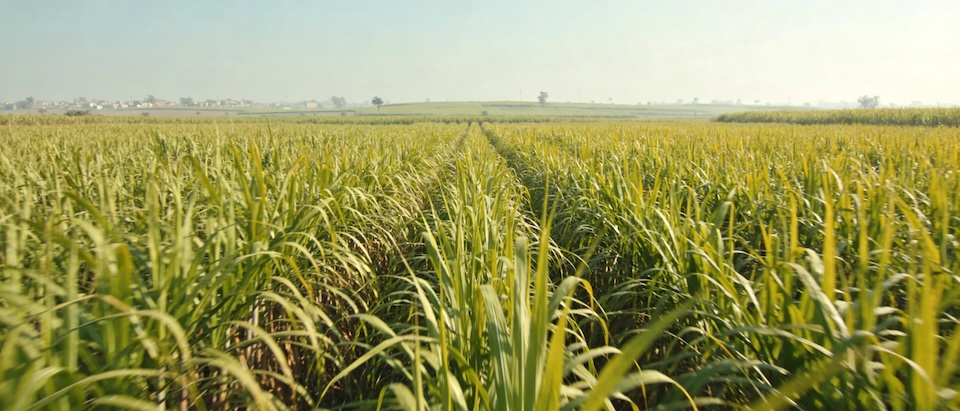
SINDH/PUNJAB — JDW Sugar Group, Pakistan’s largest sugar producer, has announced a potential “revolutionary” milestone in the country’s agricultural sector. After 11 years of indigenous research at its Thatta Sugarcane Breeding Research Centre, the group has successfully developed J16-639, a new sugarcane variety that could significantly alter the production landscape of the world’s 7th largest sugarcane producer.
Doubling the National Average: Performance Metrics
According to Jahangir Khan Tareen, Chairman of JDW Sugar Group, the J16-639 variety represents a massive leap in both agricultural yield and industrial efficiency.
Note: 1 maund ≈ 37.32 kg. J16-639’s yield translates to approximately 101.3 tonnes per hectare, far exceeding the global average of 60 t/ha and India’s average of 65–70 t/ha.
Furthermore, Muhammad Zeeshan Zafar, a leading sugarcane scientist at the group, noted that a secondary candidate, J19-1574, has already shown recovery rates exceeding 12% in ongoing evaluations, suggesting a robust pipeline of high-performance genetics.
Resilience Amidst Climate Volatility
The variety was developed specifically to address the dual threats of climate change and localized pests that have plagued Pakistan’s sugar belt. Key characteristics include:
-
Drought Tolerance: Optimized for performance in water-stressed environments and marginalized soil conditions.
-
Disease Resistance: Proven immunity to Red Rot, Smut, and White Leaf Disease—pathogens that have historically decimated domestic crops.
-
Structural Stability: Stronger stalks reduce the risk of lodging (falling over), while its high ratoon yield potential allows farmers to maintain productivity over multiple harvest cycles.
The Macro Context: Why This Matters for Global Markets
Pakistan’s sugar industry has long struggled with inefficiency. Despite being a top-10 producer, the country contributes only about 6% to global output due to low yields and underutilized milling capacity.
The 2025/26 season highlights these vulnerabilities. National production is projected to drop 6% YoY to 6.15 million tonnes, driven by flood-related damage and declining recovery rates. In September 2025, domestic retail prices surged to PKR 200/kg, forcing the government to authorize the import of 500,000 tonnes to stabilize the market.
The introduction of J16-639 targets the heart of this deficit. If scaled, this variety could close the 40% capacity gap currently faced by Pakistani mills, which often suffer from a shortage of available cane during the 100-day crushing cycle.
Corporate Impact: JDW Sugar Group
As a dominant player accounting for 15%–17% of Pakistan’s total sugar output, JDW Group operates three mills with a combined crushing capacity of 44,500 TCD (tonnes of cane per day).
The group began integrating J16-639 and J16-487 into its spring 2024 planting cycle. These varieties are expected to hit the mills by the 2026 crushing season, marking a new era for the group’s industrial recovery rates and potentially positioning Pakistan as a more consistent exporter in the long term.
YnSugar Analysis Team: Data verified against JDW Group corporate filings and Pakistan Bureau of Statistics (PBS) agricultural reports.