Vietnam has decided to extend its trade defense measures on imported Thai sugar, reinforcing ongoing tensions in Southeast Asia’s highly competitive sugar market.
Vietnam Extends Duties on Thai Sugar Until 2031
On June 4, 2026, Vietnam’s Ministry of Industry and Trade announced that anti-dumping and countervailing duties on certain sugar imports from Thailand will be extended for another five years, remaining in force until mid-2031. The updated measures will take effect on June 16, 2026.
The decision follows a sunset review, in which Vietnamese authorities concluded that removing the duties would likely lead to continued or renewed dumping practices by Thai exporters, supported by subsidies. Officials warned this could cause sustained harm to Vietnam’s domestic sugar industry.
Updated Duty Structure
Under the revised framework:
-
Mitr Phol Group: Producers linked to the group will face a 32.75% anti-dumping duty, with no countervailing duty applied.
-
Thai Roong Ruang Group: Companies associated with the group will be subject to a 25.73% anti-dumping duty plus a 4.65% countervailing duty.
-
Other Thai Exporters: All other exporters will incur a higher anti-dumping duty of 42.99%, along with a 4.65% countervailing duty.
The measures apply to both raw and refined sugar across six specific HS codes: 1701.13.00, 1701.14.00, 1701.91.00, 1701.99.10, 1701.99.90, and 1702.90.91.
Continued Monitoring and Anti-Circumvention Efforts
Vietnamese authorities emphasized that customs agencies will continue to closely monitor import flows to prevent circumvention of duties, particularly through transshipment via neighboring countries.
In previous actions, Vietnam had already imposed anti-circumvention measures on Thai-origin sugar routed through countries such as Laos, Cambodia, Indonesia, Malaysia, and Myanmar.
Background: Persistent Industry Pressure
Vietnam’s sugar sector has faced sustained pressure in recent years due to low-priced imports, particularly from Thailand. Domestic producers and cane farmers have repeatedly argued that cheaper Thai sugar has eroded profit margins and weakened the competitiveness of local mills.
Although Vietnam adjusted duty rates in 2023—lowering tariffs for major Thai producers—the protections were initially set to expire in June 2026 before this latest extension.
Regional Trade Implications
The extension highlights ongoing structural tensions within ASEAN’s sugar trade. While the ASEAN Free Trade Area facilitates intra-regional trade, it also intensifies price competition, especially in commodities like sugar where production costs vary significantly across countries.
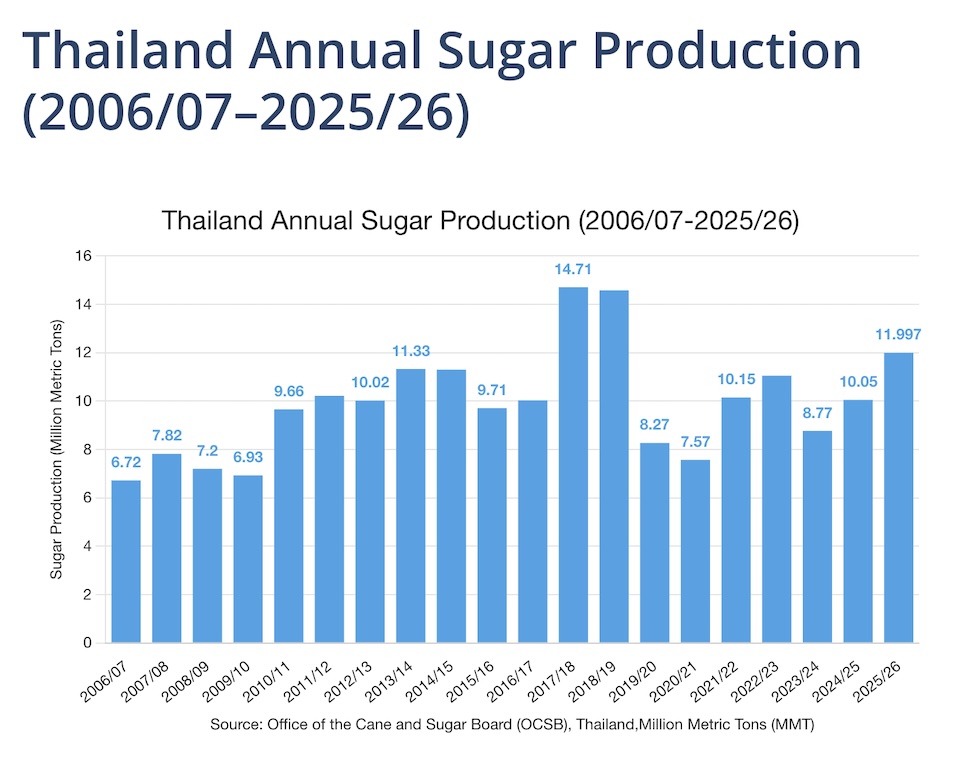
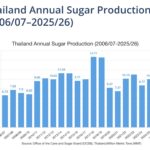
Thailand, producing over 10 million tonnes of sugar annually while consuming only around 3 million tonnes domestically, remains one of the world’s top three sugar exporters. Its export-oriented model has made it a dominant supplier across Asia, including Vietnam.
Market Note: Production and export forecasts may vary slightly by source. For the current crop year, the USDA pegs Thailand’s production near 10.3 million tonnes against a roughly 7 million-tonne export forecast, depending on individual crop year methodologies.
Analysts suggest that extending these measures will provide Vietnam’s domestic industry with a temporary buffer to improve competitiveness. However, it may also prolong trade frictions and reshape regional sugar flows, as exporters seek alternative markets or adjust pricing strategies.
Related Intelligence
As regional sugar flows shift across ASEAN, track how global trade dynamics impact the world’s largest consumer with our comprehensive China Sugar Import Report.
Example Impact
For instance, a Thai exporter outside the major groups shipping refined sugar to Vietnam will now face combined duties exceeding 47%, significantly raising landed costs. This effectively reduces price competitiveness against domestically produced sugar or imports from alternative origins.
Overall, the move underscores a broader trend: despite regional trade liberalization, protective measures remain a key tool for governments seeking to stabilize domestic agricultural industries amid volatile global markets.
Disclaimer: The market insights, data, and analysis provided in this article are for informational purposes only and do not constitute professional commercial or investment advice. While we endeavor to source accuracy from official ministry announcements and recognized organizations like the USDA, ynsugar.com assumes no liability for errors, omissions, or subsequent trade losses resulting from the use of this information.