Sugar Biosynthesis Technology Pathways developed by researchers at the Tianjin Institute of Industrial Biotechnology (TIB), Chinese Academy of Sciences, are quietly rewriting the rules of sucrose alternatives. By building a pipeline of healthier, carbon-negative sweeteners, this innovation could fundamentally reshape global food systems and agricultural commodity trading.
🌐 1. The Global Sweetness Problem & Geopolitical Pressure
Sugar has long been humanity’s most beloved yet metabolically consequential food ingredient. Once a luxury reserved for royalty, sucrose transitioned into a mass-market commodity after the Industrial Revolution—bringing with it a global epidemic of obesity, type 2 diabetes, and cardiovascular disease. Today, the World Health Organization (WHO) stringently recommends limiting free sugar intake to less than 10% of total daily energy, yet global aggregate consumption continues to climb.
The food industry’s historical response has been decades of intense sugar substitutes: saccharin, aspartame, stevia, xylitol, and erythritol. However, consumer skepticism regarding artificial chemical structures remains high, while naturally derived options routinely struggle to achieve the clean taste profile, thermal stability, and low cost needed for mass adoption. The search for a “perfect sugar”—one that mirrors the functional properties of sucrose without its metabolic burden—remains a defining challenge of modern food science.
China faces this challenge at an acute macroeconomic level. With annual domestic sucrose demand reaching approximately 15 million metric tons—and 5 to 6 million tons of that structurally dependent on overseas imports—the country’s food security and supply chains are consistently exposed to cross-border climate volatility and geopolitical trade swings. The pressure to innovate is no longer merely scientific; it is a strategic imperative to anchor the domestic “sugar jar” within tech-driven infrastructure.
⚙️ 2. From Rare Sugars to Carbon-Captured Sweeteners: The Three-Layer Logic
The Sugar Biosynthesis and Green Manufacturing team at TIB has spent nearly two decades executing a systematic solution to these converging market pressures. Their methodology follows a clear three-layer technological progression:
-
Functional Substitution (Rare Sugars): The team identified rare sugars—naturally occurring monosaccharides present only in trace amounts in nature—as the ultimate replacements. Unlike artificial sweeteners, rare sugars are biologically recognized compounds that pass through human metabolism with near-zero caloric impact and clean digestive tolerance.
-
Enzymatic Engineering (Protein Modeling): Because natural biosynthesis of rare sugars is too slow for commercial feasibility, the team spent years harvesting wild soil strains, screening candidate enzymes, and computationally redesigning protein sequences to catalyze high-yield, industrial-scale cell-free reactions.
-
Agricultural Decoupling (Carbon Utilization): As climate constraints tighten around traditional sugarcane and sugar beet acreage, the team pursued a radical alternative: synthesizing complex carbohydrates directly from carbon dioxide ($\text{CO}_2$) and alternative feedstocks like methanol, collapsing the crop-to-shelf timeline from 12 months to less than a day.
[Traditional Cane Agriculture: 12 Months] ──> High Land Footprint & Climate Risk
[TIB Bio-Synthetic Cascade: 17 Hours]    ──> Zero Land Footprint & Carbon Negative
📊 3. Comprehensive Technical Matrix: Sugar Biosynthesis Technology Pathways
To help international buyers, industrial food formulators, and commodity trading houses evaluate the commercial viability and timeline of these synthetic processes, the YnSugar Research Team has consolidated TIB’s three core technology lanes and historical benchmarks below:
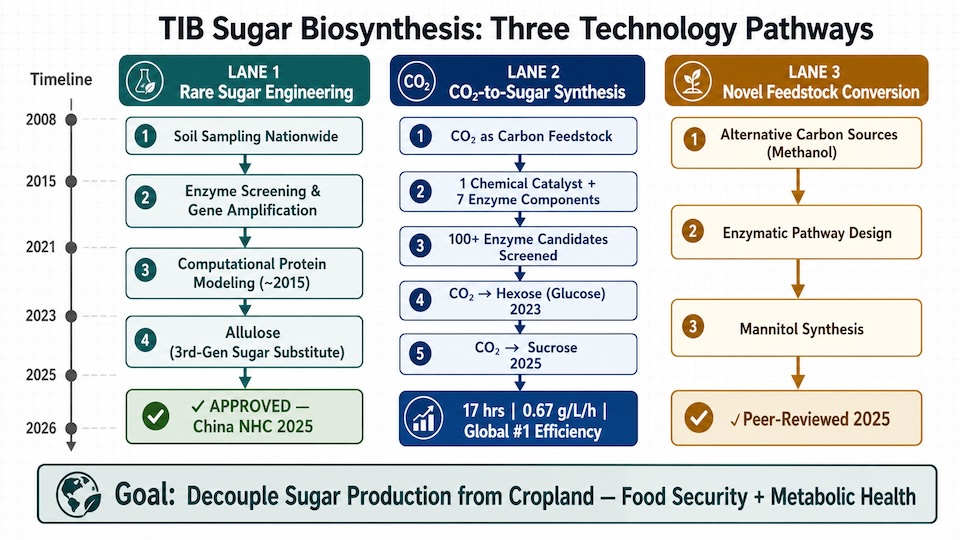
Table 1: Technical Benchmarks of TIB’s Green Manufacturing Framework
| Technology Pathway | Core Feedstock | Key Enzymatic / Catalyst Discovery | Production Cycle & Efficiency Metrics | Regulatory & Commercial Status |
|
LANE 1: Rare Sugar Engineering (e.g., D-Allulose) |
Plant-derived Biomass | Sourced from domestic soil strains; computationally optimized via protein modeling since 2015. | Iterative bio-conversion; delivers zero cooling aftertaste and high thermal baking stability. | Fully Approved (2025); China National Health Commission (NHC) clearance granted for mass supply chains. |
|
LANE 2: $\text{CO}_2$-to-Sugar Synthesis (e.g., De Novo Hexose) |
Carbon Dioxide ($\text{CO}_2$) | 1 Chemical Catalyst + 7 Engineered Enzyme Components; over 100 enzyme candidates screened. | 17 Hours total cycle; Synthesis rate at $0.67\text{ g/L/h}$; Fixation efficiency at $59.8\text{ nmol C/mg catalyst/min}$. | Global Benchmark Peak; Highest recorded artificial sugar synthesis efficiency worldwide. Laboratory proven for complex sucrose. |
|
LANE 3: Novel Feedstock Conversion (e.g., Methanol-to-Mannitol) |
Industrial Methanol | Advanced green biocatalytic enzyme cascades designed for continuous bio-reactor flow. | Rapid biochemical stream yielding stable crystalline sugar alcohols without agricultural inputs. | Peer-Reviewed (2025); Technology fully validated in global synthetic biology journals; seeking scaling partners. |
🎙️ 4. Expert Perspective: Insights from the TIB Research Team
On the Generation Leap in Sugar Substitutes
Senior Researcher Yang Jiangang draws a clear market hierarchy for industrial buyers:
“Xylitol represented the first generation of sugar substitutes; erythritol was the second; allulose is the third. Compared to the first two, allulose offers higher sweetness intensity, near-zero caloric value, and excellent functional compatibility with high-temperature food processing applications—making it an ideal sucrose replacement without the cooling defects or laxative side-effects that historically limited older alternatives.”
On Engineering the Unpredictable: The Enzyme Breakthrough
Describing the grueling journey to unlock the cell-free $\text{CO}_2$-to-glucose pathway, Yang highlights the shift from brute-force laboratory empiricism to computational precision:
“Converting $\text{CO}_2$ to glucose requires one chemical catalyst and seven enzyme components. Initially, modifying a target gene sequence with 250 amino acids meant navigating $4^{750}$ structural possibilities—looking for a needle in a cosmic haystack. By 2015, mature computational protein modeling allowed us to precisely target mutation sites, leading to a targeted sprint where we screened over 100 enzyme candidates to find the 7 optimal components.”
On R&D Culture as an Operational Asset
Associate Researcher Dr. Li Jiao, who joined the institute in 2020, points to team cohesion as the critical variable for sustaining high-risk research:
“Many evenings, after finishing intense experiments, Dr. Sun Yuanxia and Yang Jiangang would come to the students’ office just to talk. Life stress, research pressure, low morale—all of it seemed to dissolve in those conversations. In a field where breakthrough timelines routinely exceed a decade, team cohesion is an operational necessity. It is what sustained the core team through its founding phase, including a rigorous six-month period of zero initial funding without a single resignation.”
🔮 Final Outlook
Team Lead Dr. Sun Yuanxia’s operating ethos captures the project’s long-term commercial promise. When once asked what would happen if the complex biosynthesis project ultimately faced years of unrewarded effort, her reply was immediate:
“First, you have to believe this is something meaningful—it is what both the macro economy and the consumer industry urgently need. The direction is theoretically sound. It will work, sooner or later.”
As the global food system converges on the three defining challenges of the century—metabolic health, food security, and carbon utilization—the 18-year journey of TIB suggests that the next chapter of the global sugar industry will be written not in fields of cane, but in industrial fermenters, automated bioreactors, and engineered enzyme cascades.
🗃️ Data Source & Attributions: The technological milestones, biochemical reaction metrics, and institutional narratives presented in this brief are compiled based on peer-reviewed research papers and public updates published by the China Science Daily and the Tianjin Institute of Industrial Biotechnology (TIB). This content is intended solely for scientific informational, general educational, and market intelligence reference purposes. It does not constitute commercial trading, industrial formulation, or financial investment advice.
All structural data has been cross-verified by the YnSugar Analyst Team for market intelligence purposes.Our empirical sugar trade data is trusted worldwide. Check our verified [Academic References] and learn more [About Us].